

Are you experiencing persistent fatigue or do you feel that your physical performance is no longer at the desired level? Then it may be time to discover the benefits of a plant with a rich history in traditional medicine: Tribulus terrestris, also known as "old man's fangs". This plant, used for centuries in various cultures, is appreciated for its properties of stimulating libido, improving sexual function and supporting fertility.
In this article, we will explore in detail what Tribulus terrestris is, its chemical composition, its therapeutic properties, its proven health benefits, as well as the correct way to take it and potential precautions. This way, you can make an informed decision about whether Tribulus terrestris is right for you and how you can safely integrate it into your healthy lifestyle.
What is Tribulus terrestris (mother's tusks)?
Tribulus terrestris, also known as mother's tusks, is a herbaceous plant in the Zygophyllaceae family. This plant has long been used in the traditional medicine of many cultures, especially in Chinese and Ayurvedic medicine.
The motherwort is native to the Mediterranean region, but has spread to warm and tropical areas around the world, including southern Europe, Asia, Africa, Australia, and South America. This plant grows to a height of between 10 and 90 cm.
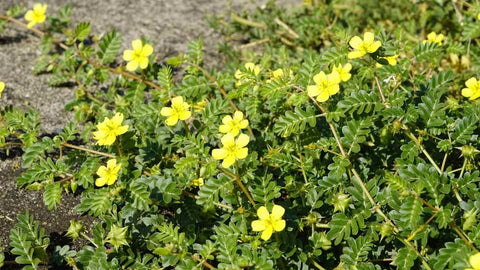
Tribulus terrestris is notable for its thorny fruits, which have earned it the popular name "old woman's fangs." The leaves are oval and compound, and the flowers have a specific yellow color.
In traditional medicine, both the root and fruit of the plant have been used for their medicinal properties. Traditional uses of Tribulus terrestris include stimulating libido, improving sexual function, maintaining urinary health, reducing inflammation, enhancing fertility, and treating respiratory conditions.
Currently, Tribulus terrestris is widely used both as a general health supplement and in hormone supplement formulas. It is a common ingredient in testosterone supplements for men looking to support vitality, physical performance, or sexual function.
Composition and properties of Tribulus terrestris
In addition to steroidal saponins, flavonoids, alkaloids and phytosterols, Tribulus terrestris also contains tannins (polyphenolic compounds with antioxidant and astringent properties), lignans (phenolic compounds with potential estrogenic effects), essential oils (which give the plant its specific aroma) and minerals (especially potassium, calcium and magnesium).
These components give the plant a series of important pharmacological properties, including adaptogenic properties (help the body adapt to stress and maintain its balance), antioxidant action (flavonoids and tannins combat oxidative stress), anti-inflammatory effect (reduces inflammation by inhibiting pro-inflammatory mediators), diuretic action (stimulates the elimination of excess fluids) and antimicrobial properties (inhibits the growth of pathogenic bacteria and fungi).
Recent research has clarified some of the mechanisms by which Tribulus terrestris exerts its effects. These include stimulating nitric oxide production, which leads to vasodilation and improved blood circulation, modulating the activity of enzymes involved in steroid hormone metabolism, interacting with hormone receptors (especially androgenic and estrogenic), and influencing intracellular signaling pathways involved in proliferation and apoptosis.
Although these properties have been demonstrated in laboratory and animal studies, more clinical research is needed to fully confirm the effectiveness and safety of using Tribulus terrestris in humans.
An important aspect is that the chemical structure of the plant can vary greatly depending on the place of origin, growing conditions (soil, climate, altitude), the part of the plant used (fruit, leaves, root), and the method of extraction and processing. This variability may partly explain the sometimes contradictory results of clinical studies and emphasizes the importance of standardizing Tribulus terrestris extracts used in supplements.
Health benefits of Tribulus terrestris
In terms of improving sexual function and fertility, research shows promising benefits. These include increased libido in both sexes, improved sperm quality (count, motility, and morphology), improvement in symptoms of erectile dysfunction, and a potential positive effect in the treatment of male infertility.
Its antioxidant and vasodilator properties may contribute to cardiovascular health. Effects such as lowering blood pressure, lowering LDL ("bad") cholesterol levels and increasing HDL ("good") cholesterol, improving blood circulation, and a potential cardioprotective effect have been observed.
Recent studies suggest that Tribulus terrestris may provide benefits to people with type 2 diabetes, including improving insulin sensitivity, reducing blood sugar, and a potential protective effect on pancreatic beta cells.
The bioactive compounds have demonstrated anti-inflammatory and analgesic properties in laboratory studies. They have been shown to reduce joint inflammation, relieve pain, and have a potential beneficial effect in chronic inflammatory conditions.
According to its traditional use, Tribulus terrestris may offer benefits for urinary tract health, such as a moderate diuretic effect, a potential role in preventing kidney stone formation, and symptom relief in some prostate conditions.
Adaptogenic properties can help the body cope better with stress. Effects such as reducing cortisol levels, improving sleep, and increasing resistance to physical and mental exertion have been observed.
Although these benefits are promising, many of them require validation through large, well-controlled clinical trials. In addition, effects may vary depending on dose, form of administration, and individual characteristics.
Tribulus terrestris and male reproductive health
Regarding the impact on testosterone levels, some studies have indicated a modest increase in free testosterone in men with initially low levels, with the effect being more pronounced in those over 40. The proposed mechanism is to stimulate the secretion of luteinizing hormone (LH). However, these effects do not compare to those of anabolic steroids and do not affect men with normal testosterone levels.
One of the most consistent benefits observed is the positive effect on sperm parameters, including increased total sperm count, improved motility and morphology, and increased sperm volume. These effects may be beneficial for men with infertility.
Tribulus terrestris may contribute to improving erectile function by stimulating nitric oxide production, modulating neurotransmitters involved in sexual arousal and having a potential anxiolytic effect, reducing stress associated with sexual performance.
Some studies suggest that Tribulus terrestris may have benefits for prostate health, including a potential anti-inflammatory effect and improvement in symptoms associated with benign prostatic hyperplasia. There is also a potential role in preventing the proliferation of prostate cancer cells, although this aspect requires further research.
Consistent with its traditional use, Tribulus terrestris appears to have a positive effect on sexual desire, improving sexual satisfaction and mood.
The effects of Tribulus terrestris on women's health
Unlike its effects on testosterone in men, Tribulus terrestris has a more complex action on the female hormonal system, with a potential effect on balancing the estrogen-progesterone ratio, a possible stimulation of estrogen production in women with low levels, and an influence on follicle-stimulating hormone (FSH), important for ovulation.
Tribulus terrestris could offer significant benefits to menopausal women, reducing hot flashes and night sweats, improving mood, and having a potential positive effect on bone density.
Similar to the effects seen in men, Tribulus terrestris appears to have a positive impact on female sex life, increasing sexual desire, improving vaginal lubrication and sensitivity, and overall sexual satisfaction.
Although more studies are needed, there are indications that Tribulus terrestris could help in cases of female infertility by stimulating ovulation and improving the quality of oocytes.
Preliminary research suggests that Tribulus terrestris may have benefits in the management of polycystic ovary syndrome (PCOS), reducing excess androgen levels, improving insulin resistance, and regulating the menstrual cycle.
Effects may vary significantly from person to person, pregnant or breastfeeding women should avoid use, and interactions with hormonal contraceptives or hormone replacement therapies are not fully known. Consulting a specialist is essential before starting any regimen, especially for women with hormonal conditions.
Tribulus terrestris and athletic performance

Initially, it was believed that Tribulus terrestris could significantly increase muscle mass by stimulating testosterone production. However, recent studies show that the effects are more limited. Some research has observed slight increases in muscle strength, especially in sedentary people who start exercising. However, without proper training, the influence on muscle development is reduced. However, it has been suggested that the effects may be better if Tribulus is combined with creatine or protein.
Several studies show that this supplement may be particularly beneficial for endurance and recovery after exercise. It may increase aerobic exercise capacity, reduce fatigue, and improve markers of oxidative stress and inflammation, which may help speed recovery.
In terms of body composition, the effects are indirect and moderate. It can help reduce fat and maintain or slightly increase muscle mass during periods of restrictive dieting.
Results in sports vary depending on the type of effort and the athlete's level of training. Tribulus seems to be more useful in endurance sports or those where rapid recovery between workouts is needed.
These effects are believed to occur by reducing stress hormones, improving blood circulation and muscle oxygenation, increasing the anabolic response to training, and antioxidant action.
Athletes and coaches should be aware that results can vary greatly from person to person, depending on genetics and training level. It is important to consider the dosage used and the timing of administration. It is also important to check compliance with the anti-doping rules of the sport practiced and take into account possible interactions with other supplements or medications.
Administration and dosage of Tribulus terrestris
Tribulus terrestris is available in a variety of forms, each with its own benefits. Capsules and tablets are the most common, offering precise dosing. Powder allows for flexible dosing and can be added to drinks or food. Liquid extract offers potentially faster absorption, but may have a stronger taste. Tea is a traditional method of consumption, although the concentration of active compounds can vary.
The optimal dosage may vary depending on the purpose of use and the characteristics of each individual. For improving sexual function, it is recommended to take 250-750 mg of standardized extract, 1-3 times a day. For sports purposes, the recommended dose is between 500 and 1500 mg per day, divided into 2-3 doses. For managing menopausal symptoms, 250-500 mg 2 times a day is suggested. It is important to start with lower doses and increase gradually, carefully observing the effects on the body.
Timing of administration may influence efficacy. For general effects, administration 30-60 minutes before meals is recommended. For athletic support, a dose 30-60 minutes before training may be beneficial. For sleep enhancement, a dose 1-2 hours before bedtime may be helpful.
To prevent tolerance development and maximize benefits, it is recommended to cycle supplementation, with 4-8 weeks of use followed by 2-4 weeks of rest, or 5 days of use followed by 2 days of rest.
Contraindications and side effects of Tribulus terrestris
There are a few groups that should avoid using Tribulus terrestris altogether. Pregnant or breastfeeding women should not use this supplement due to potential hormonal effects that may pose risks to the developing fetus or infant. People with hormone-dependent cancers should avoid Tribulus terrestris as it may influence hormone levels. Patients with severe liver or kidney disease should avoid use as the metabolism and elimination of the active compounds may be impaired.
Although many people tolerate Tribulus terrestris well, some side effects have been reported, including gastrointestinal upset, sleep problems, and allergic reactions. Hypoglycemia may occur in people who are predisposed to or taking diabetes medications.
Tribulus terrestris may interact with certain medications, enhancing or decreasing their effects. It may increase the hypoglycemic effect of diabetes medications. There is a possible increased risk of bleeding when used concomitantly with anticoagulants. It may enhance the blood pressure-lowering effect of hypertension medications. Also, use with steroids or hormonal supplements may lead to hormonal imbalances.
Certain groups should be especially cautious and consult a doctor before using Tribulus terrestris, including people with pre-existing hormonal conditions, patients about to undergo surgery, and performance athletes.
To minimize risks, it is recommended to start with low doses and increase gradually, carefully monitoring any adverse reactions. Use should be stopped immediately and a doctor consulted if severe or unexpected side effects occur. In case of long-term use, regular medical check-ups, including hormonal and liver tests, are recommended.
Therefore, Tribulus terrestris proves to be a plant with valuable potential for health, offering various benefits, from improving sexual function and fertility, to supporting athletic performance and alleviating menopausal symptoms. However, it is essential to approach its use responsibly and with information, taking into account potential contraindications and side effects. Before starting any Tribulus terrestris supplementation regimen, consult a doctor or nutrition specialist to determine if it is right for you and to establish the optimal dosage, depending on your individual needs and characteristics. In addition, make sure to purchase supplements from trusted manufacturers, who guarantee the quality and purity of the extracts. This way, you will be able to benefit to the maximum from the therapeutic properties of this plant, in complete safety.
reference
1. Rogerson S, Riches CJ, Jennings C, Weatherby RP, Meir RA, Marshall-Gradisnik SM. The effect of five weeks of Tribulus terrestris supplementation on muscle strength and body composition during preseason training in elite rugby league players. J Strength Cond Res. 2007;21(2):348-353.
2. https://www.webmd.com/vitamins/ai/ingredientmono-39/tribulus
3. https://www.healthline.com/nutrition/tribulus-terrestris
Photo source: Shutterstock.com.