
Author: Irina Nedelcu, Co-owner and Chief Operating Officer of Nutriland, food management and safety specialist
Updated: November 13, 2026
In short: Creatine is a compound produced by the body from three amino acids and stored almost entirely in the muscles. The form with the most studies is creatine monohydrate. It is taken daily: the benchmark is 3 g per day, and in practice, 3-5 g per day is usually used.
What is creatine?
Creatine is a nitrogenous compound synthesized in the liver and kidneys from arginine, glycine, and methionine. Approximately 95% of the creatine in the body is found in skeletal muscles, either free or in the form of phosphocreatine, a reserve used for the rapid regeneration of ATP during short and intense efforts. The body uses about 1-3 g of creatine daily, and a diet that includes meat and fish covers about half of this amount (Kreider et al., 2017).
In what products do you find creatine?
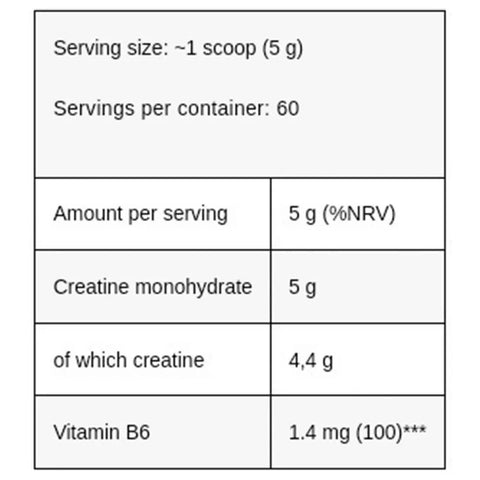
You can find it as plain powder, unflavored or flavored, in capsules and tablets, as well as in pre-workout formulas, mass gainers, and post-workout blends. In combination products, check the label for the amount of creatine per serving.
What doses are usually used?
Creatine is used as a daily dose, taken consistently, every day. The benchmark is 3 g of creatine per day, the amount to which the label statement refers. In practice, 3-5 g per day is usually used. With consistent daily intake, muscle creatine stores fill in approximately 3-4 weeks (Kreider et al., 2017). To calculate based on your weight, use the creatine calculator.
What forms exist?
Creatine monohydrate is the form to which most studies and recommendations refer. The micronized version has finer particles that dissolve more easily, but it is the same substance. There is also creatine HCl or buffered creatine, with less comparative data.
What can the label say?
On the label of a product that provides 3 g of creatine per day, the following statement may appear: “Creatine increases physical performance in successive bouts of short-term, high-intensity exercise,” accompanied by information that the beneficial effect is obtained with a daily intake of 3 g of creatine. The statement is intended for adults who perform high-intensity physical exercise.
For adults over 55 who regularly perform resistance training, there is also the formulation: “Daily creatine intake can enhance the effect of resistance training on muscle strength in adults over 55 years of age.” The beneficial effect is obtained with a daily intake of 3 g of creatine, in combination with resistance training with gradually increasing load, performed at least three times a week for several weeks, at an intensity of at least 65-75% of the maximum load for one repetition.
Creatine products at Nutriland
- Creatine monohydrate 300 g, Ostrovit (Supreme Pure)
- Creatine monohydrate Gold 300 g, powder, Kevin Levrone
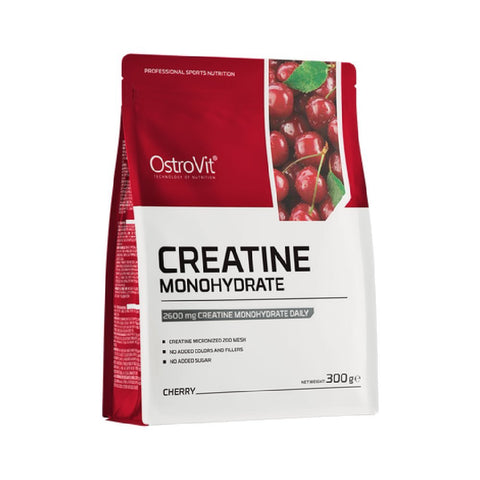
- Creatine monohydrate 300 g, Ostrovit (flavored)
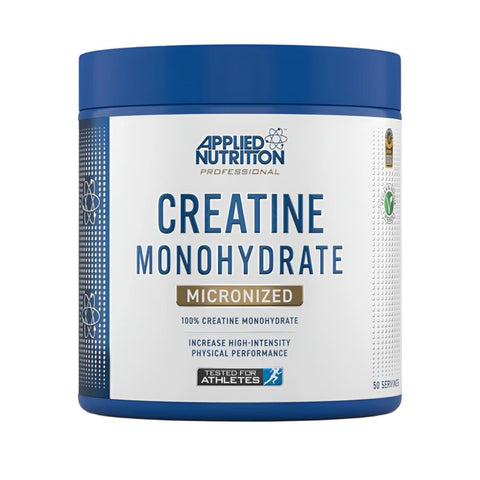
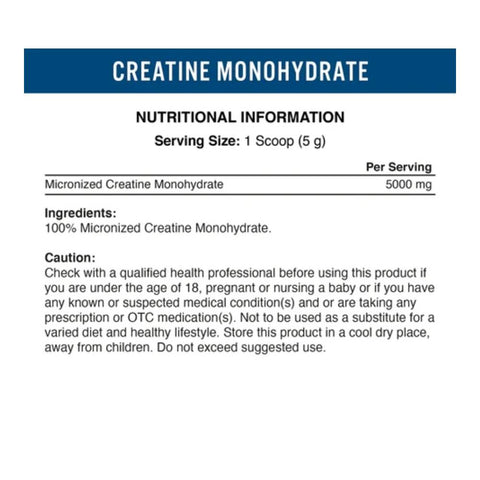
- Micronized creatine monohydrate 250 g, Applied Nutrition
The updated price and availability are displayed on each product page.
Read more
- Creatine: what the evidence from studies says
- Creatine Collection
- Creatine monohydrate Collection
- Creatine calculator
- Dictionary: Whey protein
- Dictionary: Beta-alanine
- Nutriland Ingredient Dictionary
Note: a varied and balanced diet and a healthy lifestyle are important. Follow the quantity and method of consumption on the product label and do not exceed the recommended daily dose. The products are not intended for children, pregnant or breastfeeding women; if you have a medical condition, consult your doctor before use.
Sources
- Kreider RB et al. International Society of Sports Nutrition position stand: safety and efficacy of creatine supplementation in exercise, sport, and medicine. Journal of the International Society of Sports Nutrition, 2017. pubmed.ncbi.nlm.nih.gov/28615996/
- EFSA NDA Panel. Scientific Opinion on the substantiation of health claims related to creatine and increase in physical performance during short-term, high intensity, repeated exercise bouts (...). EFSA Journal, 2011;9(7):2303. doi.org/10.2903/j.efsa.2011.2303