
Author: Irina Nedelcu, Co-owner and Chief Operating Officer at Nutriland, specialist in food management and safety
Updated: November 11, 2026
The calculator shows the daily creatine dose suitable for your weight and how many days a container will last. For details about the studies, read what the studies show about creatine.
In short
- The reference dose is 3 g of creatine per day.
- In practice, 3–5 g per day are usually used; heavier individuals may aim for the upper end of the range.
- With consistent daily intake, muscle creatine stores increase gradually over approximately 3–4 weeks.
- What matters is the daily intake, not the exact time you take creatine.
Calculate your creatine dose
How we calculate
We start with the reference dose of 3 g per day. We also calculate 0.03 g per kg of body weight, rounded to 0.5 g, and place the result within 3 to 5 g per day, the range usually used in practice (ISSN position 2017). Up to approximately 108 kg, the result remains 3 g per day. With consistent daily intake, muscle creatine stores increase gradually over approximately 3–4 weeks.
Creatine improves physical performance during repeated bouts of short-duration, high-intensity exercise. The beneficial effect is achieved with a daily intake of 3 g of creatine. This effect refers to adults who perform high-intensity exercise.
Daily dose by weight
| Weight | Daily dose | 300 g container |
|---|---|---|
| 60 kg | 3 g | 100 days |
| 70 kg | 3 g | 100 days |
| 80 kg | 3 g | 100 days |
| 100 kg | 3 g | 100 days |
| 120 kg | 3.5 g | 85 days |
| 150 kg | 4.5 g | 66 days |
Useful products and guides
The most studied form is creatine monohydrate. Some currently available options:
- Creatine monohydrate 300 g, Ostrovit
- Gold creatine monohydrate 300 g, Kevin Levrone
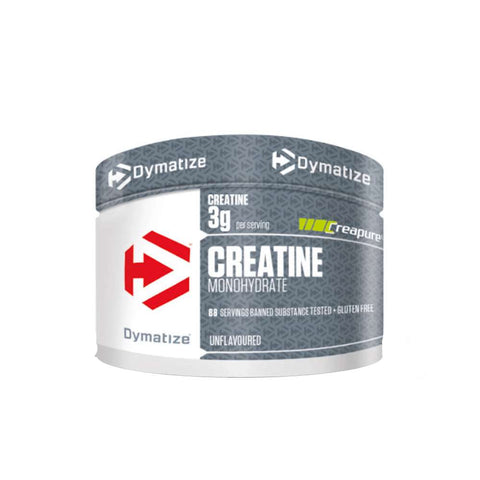
- Creapure creatine monohydrate 300 g, Dymatize
- Creapure Micronised Creatine 500 g, Body Attack
See the entire creatine category or just creatine monohydrate. To track your progress in the gym, also use the 1RM calculator.
Also read: When to take creatine, Creatine for women, Side effects of creatine, Creatine monohydrate vs HCl.
Sources
- Kreider RB et al. (2017). ISSN position stand: safety and efficacy of creatine supplementation. J Int Soc Sports Nutr 14:18
- Antonio J et al. (2021). Common questions and misconceptions about creatine supplementation. J Int Soc Sports Nutr 18:13
- EFSA (2011). Scientific Opinion on creatine and increase in physical performance. EFSA Journal 9(7):2303
- NIH Office of Dietary Supplements. Dietary Supplements for Exercise and Athletic Performance
Note: A varied and balanced diet and a healthy lifestyle are important. Follow the recommended amount and method of consumption on the product label and do not exceed the recommended daily dose. The products are not intended for children, pregnant or breastfeeding women; if you have a medical condition, consult your doctor before use.