
Your body is the most complex "gym" you'll ever have. Calisthenics transforms your own body weight into a tool of strength, balance, and control, helping you build muscle naturally, without equipment or external weights.
This method emphasizes natural movements, the mind-body connection, and gradual progression. Whether you're just starting out or looking to take your workouts to the next level, calisthenics can help you build a strong, flexible, and toned body - and in this article, you'll discover how to do it correctly and effectively.
Summary:
-
Calisthenics uses your own body weight to develop strength, balance, coordination, and mobility , without depending on external equipment or weights.
-
Progress comes through basic exercises and gradual evolution , from simple movements like push-ups and squats to advanced exercises that require control and stability.
-
Consistency, sports nutrition and proper recovery are the key elements to achieving lasting results and turning calisthenics into a balanced lifestyle.
Contents:
-
What is calisthenics and why is it worth choosing this type of training?
-
Fundamental Calisthenics Exercises for Beginners - First Steps to Strength and Control
-
Squats - correct technique and effective progressions for strength and control
-
Pull-ups - how to progress correctly and safely from beginner to advanced level
-
Planking and isometric exercises for stability - essential elements in calisthenics
-
Functional training - how to structure a complete and efficient routine
-
Calisthenics progressions and adaptations for all levels - how to evolve
-
Common mistakes in calisthenics - how to effectively avoid them in training
What is calisthenics and why is it worth choosing this type of training?
Calisthenics is a training method that uses your own body weight to develop strength, endurance, coordination and control of movements. The name comes from the Greek - "kallos" (beauty) and "sthenos" (strength) - symbolizing the balance between power and elegance in movement.
The origin and evolution of calisthenics
Calisthenics has its roots in ancient Greece, where it was used to train soldiers and athletes. In the 19th century, it was introduced into physical education programs in schools, becoming a basis for developing strength and physical discipline.
Currently, calisthenics has returned to the forefront due to the popularity of functional and outdoor training, being preferred by those who want a strong, mobile and harmonious body, without depending on complicated equipment.
How does this type of training work?
Calisthenics is based on functional exercises that simultaneously engage multiple muscle groups. Instead of external weights, you use your own body weight as resistance.

This style of training teaches you to control your body as a whole, developing not only strength, but also coordination, balance, and awareness of movements.
The main benefits of calisthenics
-
Functional strength: improves physical performance and natural movements in daily life.
-
Flexibility and mobility: increases range of motion and protects joints.
-
Coordination and balance: develops body control and postural stability.
-
Accessibility: can be practiced anywhere, without equipment or high costs.
-
Gradual progression: allows evolution from simple exercises to complex movements, depending on your level.
To diversify your workouts and accelerate your progress, you can integrate useful accessories , such as resistance bands . These add variety, resistance, and additional muscle stimulation.
Why choose calisthenics?
Calisthenics combines strength, control and aesthetics in a natural way. It is a discipline that emphasizes correct movement, constant evolution and connection with your own body.
Whether you're just starting out or looking for an advanced training method, calisthenics helps you build a strong, balanced, and resilient body - using the simplest and most effective tool you have: your own body.
Fundamental Calisthenics Exercises for Beginners - First Steps to Strength and Control
To begin calisthenics training, it is essential to first learn the basic exercises, which build your strength, stability, and body control. These simple movements are the foundation of your progress and prepare you for more complex exercises in the future.

Essential exercises for beginners
-
Push-ups: Develops strength in the chest, triceps and shoulders and helps stabilize the torso.
-
Squats: Strengthen the muscles of the thighs, buttocks, and calves, improving balance.
-
Plank: Activates the abs, back, and shoulders, providing a solid foundation for all movements.
-
Pull-ups: Strengthens the upper body, especially the back and arms.
-
Dips: Work your triceps, chest, and shoulders from a different angle, completing your workout.
How to start correctly?
Push-ups:
-
Start with wall push-ups - position yourself at arm's length and push up slowly, keeping your body straight.
-
Continue with knee push-ups when you become more stable.
-
Move on to classic push-ups when you can do 10-15 controlled repetitions.
Tractions:
They may seem difficult at first, but they can be adapted. Start with negative pull-ups: raise yourself to the top position using a bench, then slowly lower yourself. This method helps you develop the strength needed for your first full pull-up.
Dips:
Start with bench or chair dips to learn the correct movement. As you progress, you can move on to parallel bar dips, which put more strain on your triceps and shoulders.
Tips for a good start
-
Focus on technique and movement control, not on the number of repetitions.
-
Keep your body aligned and perform each exercise slowly, paying attention to form.
-
Breathe in a controlled manner and give your body time to adapt - progress comes gradually.
By mastering these basic exercises, you will build the functional strength and body control you need to progress to more complex calisthenics movements. It is more important to do the exercises correctly and consciously than to rush them - the quality of the movements is the key to progress.
Squats - correct technique and effective progressions for strength and control
Squats are one of the best calisthenics exercises, and they are important for building strength in your lower body. They not only work your leg muscles, but they also help you maintain a stable stance, maintain balance, and improve coordination.

Correct technique for squats
-
Stand with your feet shoulder-width apart, toes pointed slightly outward.
-
Keep your chest up and look forward.
-
Push your hips back, as if you were sitting in a chair.
-
Slowly lower until your thighs are parallel to the ground.
-
Keep your weight on your heels, not your toes.
-
Stand up by pushing through your heels and squeezing your glutes.
Squat progressions
-
Pause squats: Stay in the bottom position for 2-3 seconds.
-
Jumping Squats: Add a dynamic element to build strength.
-
Single-Leg Squats: Requires advanced strength, balance, and flexibility.
-
Chair Squats: Variant for beginners who cannot do full squats.
It's important to progress gradually. If you can't do full squats, start with chair squats. Lower yourself until your buttocks touch the chair, then stand up. As you get stronger, you can give up the chair and lower yourself lower. If you're consistent and patient, you'll be able to do this exercise very well.
Pull-ups - how to progress correctly and safely from beginner to advanced level
Pull-ups are considered a great upper body strength exercise and are one of the hardest exercises in calisthenics. They develop strength in your back, shoulders, biceps, and core muscles, which are important for performing more complex movements.

For most beginners, doing a full pull-up seems like a daunting task. But with a strategy and patience, anyone can do pull-ups.
Progressions for the first traction
-
Negative pull-ups - stand on a bench and lower yourself down as slowly as possible.
-
Elastic band assisted pull-ups - reduces body weight.
-
Low-bar rowing - develops traction force in an easier position.
-
Full traction - first traction without assistance.
-
Weighted pull-ups - for advanced development.
-
One-arm pull-ups - the hardest level, requires years of training .
Pull-up variations for progress
-
Wide-grip pull-ups: Develops the latissimus dorsi muscles.
-
Narrow-grip pull-ups: Work your biceps more intensely.
-
Weighted pull-ups: To increase maximum strength.
-
Single-arm pull-ups: The most advanced level of difficulty.
So, pull-ups are a clear indicator of strength and body control. They require patience, technique, and discipline, but the reward is worth it: a strong back, defined arms, and better body awareness.
Approach your workouts carefully and progressively, and each repetition will bring you closer to your goal - a perfect pull-up and visible progress in calisthenics.
Planking and isometric stability exercises - essential elements in calisthenics
Isometric exercises, especially planking, are very important in calisthenics. They help you develop strength through static muscle contractions without changing the length of the muscle, and they help you have a solid base and control your body.

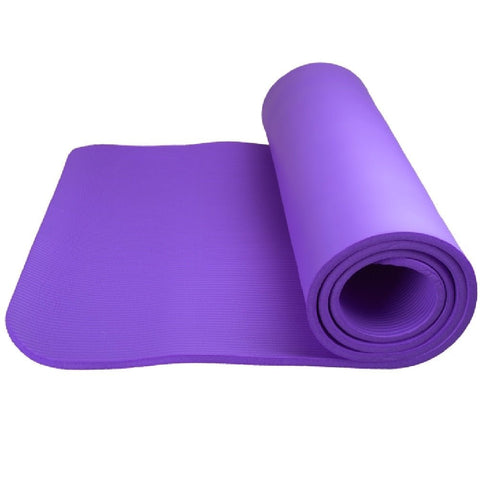
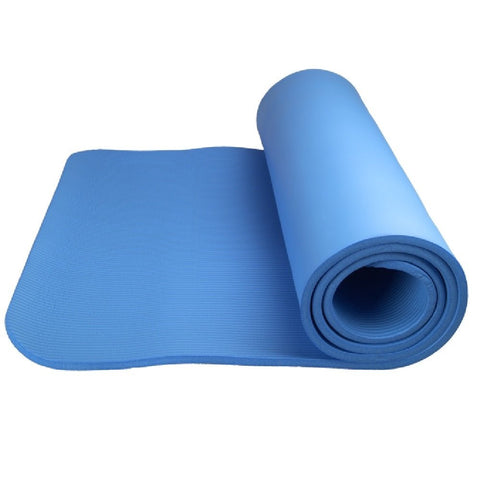
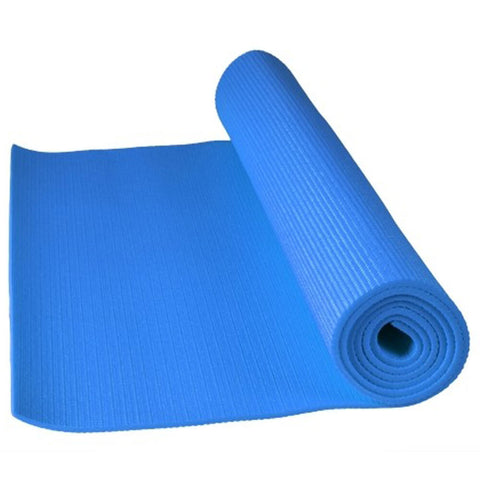
Classic planking activates the abdominal, back and shoulder muscles, creating a natural corset around the torso. For increased comfort and better grip during floor exercises, you can use specially designed training mats .
Correct planking technique
-
Support yourself on your forearms and the tips of your toes.
-
Keep your body straight from head to heels.
-
Don't lift your hips too high.
-
Don't let your hips drop.
-
Breathe normally and maintain muscle contraction.
Essential isometric exercises
-
Classic Plank: Activates the abdominal, back and shoulder muscles.
-
Side Plank: Works the oblique muscles for lateral stability.
-
Hollow body hold: Prepares for advanced moves like handstands.
-
Wall sit: Develops strength in the thigh muscles and glutes.
Isometric exercises not only help you strengthen your muscles, but also help you coordinate your body better and have more muscular endurance. Your muscles learn to stay contracted for longer, which helps you have a stable position in all other exercises.
These exercises may seem simple, but they become increasingly difficult the longer you hold the position. They are the foundation upon which all the more complicated movements in calisthenics are built, helping you progress safely.
Functional training - how to structure a complete and efficient routine
Functional calisthenics training focuses on developing physical abilities that help you with everyday activities. A well-structured routine should be balanced, progress you, and be right for you, including all the important elements of functional fitness.
Structure of a training session
-
Warm-up (10-15 minutes) - joint movements and cardio exercises.
-
Main exercises - combining pushing and pulling movements.
-
Lower body exercises - squats and lunges.
-
Stability exercises - planking and hollow body.
-
Relaxation and stretching - for recovery and flexibility.

Types of training organization
-
Circuit training: Combine different exercises with short breaks for strength and cardio.
-
Muscle group training: Works certain areas intensely, requires more recovery time.
-
Full-body workout: Works the entire body in each session, ideal for beginners.
If you are a beginner, it is recommended to train 2-3 times a week, leaving at least one day of rest between workouts to allow your muscles to recover. As you gain experience, you can gradually increase the frequency to 4-6 days a week, provided that you alternate muscle groups and intensity level.
Advanced athletes can train as many as 6-7 days a week if they follow a split routine, in which each muscle group receives a minimum of 48 hours of recovery. However, daily high-intensity training for the same muscle groups is not recommended, as it can slow down recovery and progress.
For visible results, it is important to progress gradually - increase the number of repetitions, sets or duration of exercises by about 5-10% per week, depending on your level. Listen to your body and adjust your training according to the degree of fatigue and recovery capacity.
Sports nutrition plays an essential role in performance. The correct intake of protein, carbohydrates, healthy fats and electrolytes supports muscle recovery, energy levels and adaptation to exercise. Supplements can only be useful as a support, not as a substitute for a balanced diet.
You can also integrate many other accessories and exercise variations to maintain your motivation and stimulate progress. An effective routine is one that you can sustain in the long term, that brings consistent results, without overexertion, and helps you maintain your balance between training, nutrition, and recovery.
Calisthenics progressions and adaptations for all levels - how to evolve
Progressions are very important in calisthenics, as they help you progress from simple exercises to spectacular movements. Each exercise has several variations, suitable for different levels of strength and experience, helping you develop in the long term.
Methods of progression in calisthenics
-
Increasing reps: Gradually add more repetitions to each exercise.
-
Change the angle: Push-ups with legs raised for increased difficulty.
-
Reducing fulcrums: One-arm push-ups for maximum challenge.
-
Dynamic elements: Push-ups with applause for strength development.
Push-up progressions
-
Wall push-ups - for absolute beginners.
-
Knee push-ups - developing core strength.
-
Normal push-ups - standard technique.
-
Push-ups with raised legs - increasing difficulty.
-
Diamond push-ups - focus on triceps.
-
One-arm push-ups - advanced level.
You can progress to pull-ups in the same way: negative pull-ups, assisted pull-ups, regular pull-ups, weighted pull-ups, and single-arm pull-ups. Each stage helps you develop the strength needed for the next, creating a solid foundation for progress.

It's important to adapt exercises to your current level. If an exercise is too difficult, choose an easier version that allows you to perform 5-8 correct and controlled repetitions. If it becomes too easy and you can do more than 15 repetitions without effort, it's time to move on to a more advanced version or increase the difficulty by varying the grip, angle, or resistance.
To encourage adaptation and avoid stagnation, track your progress consistently. You don't need to test your strength at set intervals, but it's helpful to periodically (every 2-4 weeks) assess how your rep count, movement control, and resistance level are evolving. You can use methods like training pyramids or gradual progression to gradually increase your strength and endurance.
Progress in calisthenics is not always linear - there may be periods when progress stagnates. These moments are normal and can be overcome with training adjustments, exercise variation, and patience. Consistency, rest, and proper nutrition remain essential for long-term progress.
Common mistakes in calisthenics - how to effectively avoid them in training
Calisthenics progress depends on consistency and attention to detail. Many people slow down their progress or face injuries due to common mistakes. Avoid these pitfalls and train smart by following the recommendations below.
1. Progression too fast
One of the most common mistakes is rushing. If you move on to difficult exercises too soon, you risk losing your proper form and getting injured.
Solution: Strengthen your base before moving forward. Every exercise—push-ups, pull-ups, squats—has progressive variations. Learn them gradually, adding just 5-10% more effort each week.
2. Neglecting technique
Incorrect execution reduces the effectiveness of training and increases the risk of muscle or joint pain.
Solution: Focus on slow, controlled movements, keeping your body aligned. Don't sacrifice form for a higher number of reps.
3. Inconsistent training
Alternating periods of intense effort with long breaks hinders progress.
Solution: train consistently, at least three times a week, and maintain a balance between effort and recovery.
4. Lack of warm-up and relaxation
Starting your workout without warming up or skipping stretching at the end can lead to injuries.
Solution: Dedicate 5-10 minutes to warming up before each session - light movements, joint rotations, muscle activation. After training, stretch to improve flexibility and recovery.
5. Joint locking
Fully extending your arms or legs can overstress your joints.
Solution: maintain a slight bend in your knees and elbows to protect your ligaments and keep muscle tension constant.
6. Disobeying the body
Ignoring signals of fatigue or pain can lead to injuries.
Solution: Work within your limits and avoid movements that cause discomfort. If you feel pain, stop and analyze your technique or level of difficulty.
7. Lack of rest days
Overexertion can slow recovery and progress.
Solution: Give your body time to recover. Two to three strength training sessions per week are ideal, with at least one day of rest in between.
8. Incorrect breathing
The tendency to hold your breath during exercise increases tension and fatigue.
Solution: Breathe steadily - inhale during the descent and exhale during the push-off. Breath control maintains stability and optimizes performance.
9. Comparisons with others
Comparing your progress to others often leads to demotivation or overexertion.
Solution: Focus on your own progress. Every body has a different rhythm, and real progress is measured by control, balance, and consistency, not by comparisons.
Learn to listen to your body, progress gradually, and focus on technique. Calisthenics is not about perfection, but constant progress. With patience and consistency, each workout becomes a step in your evolution toward strength, control, and balance.
In conclusion, calisthenics is not just about physical training, but a form of discipline and self-control. Through consistency, balanced sports nutrition and attention to technique, each workout brings you closer to a stronger and more balanced version of yourself.
You don't need fancy equipment or expensive memberships - you just need willpower and patience. With every move you perform correctly and every step you take towards progress, you build not only strength, but also confidence in your own body.
References:
-
Healthline. (2024). 8 Calisthenics Exercises for a Basic Workout.
-
Harvard Health Publishing. (2024). Calisthenics: An effective, low-frills way to stay fit.
Photo source: Freepik.com.