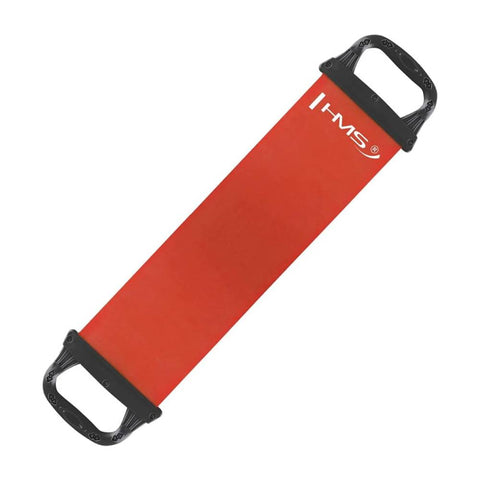
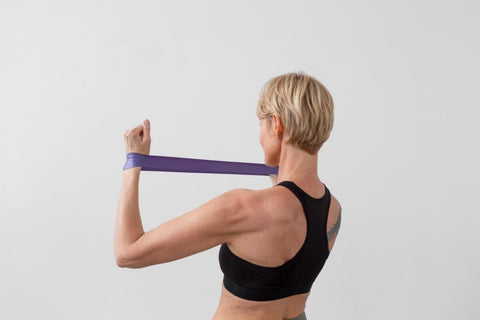

Fitness resistance bands have become a trusted ally for anyone who wants a complete, simple and effective workout without relying on bulky equipment. These lightweight yet powerful accessories make workouts a flexible and accessible experience – whether you're working out at home, at the office or even on vacation.
Elastic band exercises for women and men are suitable for both beginners and experienced users, thanks to the progressive resistance that adapts to each individual's level. This way, you can build strength, tone and mobility at your own pace, without unnecessary pressure or risk.
In this article, you will discover how to use resistance bands correctly, how to choose them based on your goals, and what exercises you can include in your routine to get real results - regardless of location or fitness level.
Summary
-
Elastic bands are versatile and allow for complete workouts for all muscle groups , wherever you are, without bulky equipment.
-
A structured band program includes warm-up, varied exercises, progression and stretching , for effective results and muscle balance.
-
Correct use of the band is essential, and choosing the right resistance and controlling movements increases efficiency and prevents injuries.
content
-
The benefits of elastic band exercises - why is it worth including them in your routine?
-
How do you choose the right elastic band for your needs?
-
Elastic band exercises for legs and buttocks - tone, control and mobility
-
Arm and shoulder workout with elastic band - for strength and definition
-
Back exercises with elastic band - optimal posture and support
-
Abdominal training with elastic band - active and effective core
-
Complete resistance band training program - simple and effective
-
How do you use the elastic band correctly for effective results?
The benefits of elastic band exercises - why is it worth including them in your routine?
Fitness bands are a modern and effective choice for those who want to train without classic weights or bulky machines. The variable resistance of the bands provides a progressive challenge - the more you pull on the band, the more tension increases.
What benefits does this type of resistance bring?
Resistance bands have the advantage of activating the muscles both during the contraction (concentric) and the recovery (eccentric) phases, which leads to deeper muscle engagement. In addition, they allow for constant tension throughout the movement, unlike free weights where the tension can vary. This feature helps improve control over the exercise and increases the efficiency of each repetition.
Versatility for all muscle groups
One of the biggest advantages of elastic bands is their versatility:
-
You can work all muscle groups: legs, buttocks, arms, shoulders and abdomen;
-
You can create varied programs, avoiding monotony;
-
It adapts to any fitness level - beginner or advanced.
With just one elastic band, you can get a complete workout without the need for bulky equipment. However, for added comfort and stability, bands can be used with simple accessories , such as fitness mats , which provide support for floor exercises and protect joints during execution. This makes training not only effective, but also more enjoyable.

Portable and easy to store
Unlike traditional equipment:
-
The strips are light, flexible and do not take up space;
-
Fits easily into a bag or backpack;
-
They can be used at home, in the park, at the office or while traveling.
Basically, you can take your "gym" with you wherever you go.
Safety and protection for joints
Resistance bands are even safer compared to free weights:
-
It offers progressive resistance, reducing the risk of overexertion.
-
They allow more fluid and controlled movements, ideal for preventing injuries.
-
They are suitable for recovery after injuries or for those with joint conditions.
Thus, these gym accessories are a practical and effective solution for anyone who wants to train smart, without investing in heavy equipment. With a low impact on the joints, but with excellent results, they are the perfect choice for an active and flexible lifestyle.
How do you choose the right elastic band for your needs?
Choosing the right resistance bands is essential for a safe and effective workout. There are many options, and the right choice depends on several factors, such as your fitness level, training goals, and the type of exercises you are doing.

Resistance level – a basic criterion
The most important aspect when choosing an elastic band is the resistance it offers. Manufacturers often use a color code:
-
Yellow/red – light resistance (ideal for beginners or recovery).
-
Green / blue – medium resistance (for an intermediate level).
-
Black / purple – high resistance (for advanced or strength).
If you're just starting out, opt for a light to medium resistance band and work your way up gradually. It's important not to sacrifice proper form for intensity.
Material and quality – durability and safety
A good elastic band should be made of durable materials, such as natural latex or durable polymers. These provide uniform elasticity and resistance to wear. Always check the band before use - cracks or uneven stretching can lead to breakage and injury.
A quality choice also means safety during exercise, but also an investment that lasts over time.
Choose the type of band depending on the exercises
There are several types of elastic bands, each with specific uses:
-
Tubular bands with handles – excellent for pull-ups and strength exercises for arms and back.
-
Flat bands – ideal for stretching and resistance exercises.
-
Loop bands – perfect for leg and butt exercises.
Choose the band that best suits your training style and targeted muscle groups!
Elastic band exercises for legs and buttocks - tone, control and mobility
The legs and buttocks area play an essential role in both the aesthetic appearance and the functionality of the body. Training these muscle groups contributes to strength, balance and stability, providing a solid foundation for all daily movements. Elastic band exercises for the legs are an effective method of toning, sculpting and strengthening, with a low impact on the joints.

Squats with an elastic band – for strength and control
Squats are even more effective when combined with an elastic band. Placed above the knees or under the soles of the feet, the band adds constant resistance, intensifying muscle activation. Keep your back straight and lower until your thighs are parallel to the floor, then return to a controlled position. This exercise simultaneously works your quadriceps, glutes, and core.
Side lunges – for abductors and stable hips
The lateral lunge with an elastic band is great for activating the abductors and hip stabilizer muscles. Position the band above your knees and take wide, side-to-side steps, keeping the tension constant. This exercise improves mobility, balance, and coordination, and is also great for preventing injuries.
Leg raises – for sculpted buttocks
In a four-legged position, with the band around the soles of the feet, alternately lift one leg toward the ceiling, keeping the knee bent. These lifts isolate the glutes and effectively work the hamstrings, contributing to a well-defined butt and a stable lower back.

Glute bridge – maximum activation in the midsection
Band bridges add intensity to a classic exercise. Lying on your back, with the band above your knees, lift your hips so that you form a straight line from your knees to your shoulders. The tension in the band emphasizes the activation of the glutes medius and minimus, making it ideal for toning and supporting your spine.
Arm and shoulder workout with elastic band - for strength and definition
Building strength in your arms and shoulders doesn't necessarily require dumbbells or complex machines. Resistance bands offer a practical and effective alternative, allowing for a variety of exercises targeting your biceps, triceps, deltoids, and shoulder stabilizers. With them, you can get a complete upper body workout right from home or in any small space.
Bicep curls – constant tension, fast results
A classic exercise adapted with an elastic band: bicep curls. Standing on the band or fixing it to the ground, bring your arms towards your shoulders with controlled movements. The progressive resistance ensures continuous activation of the biceps, but also the forearm muscles. Perfect for toning and strength.
Triceps extensions – contour and tone the back
For a well-defined arm, tricep extensions are essential. You can perform the exercise with the band overhead or behind your torso, extending your arms fully. These movements target the different heads of the triceps and contribute to a firm and balanced look.
Lateral Raises – Sculpted and Balanced Shoulders
Band lateral raises are great for your lateral deltoids, giving you that rounded, aesthetic shoulder shape. Standing on the band, raise your arms out to your sides to shoulder level, keeping your elbows slightly bent. Focus on the controlled contraction of the muscles.
Shoulder press – functional power in vertical movements
A complete shoulder exercise: the band overhead press. From a standing position on the band, push your arms up, fully extending your elbows. This move works your anterior and posterior deltoids, as well as your triceps – making it ideal for improving shoulder strength and stability.
Back exercises with elastic band - optimal posture and support
A well-trained back is essential for correct posture and musculoskeletal health. With the help of elastic bands, you can strengthen your back muscles effectively, wherever you are. They allow for specific work on different areas – from the upper trapezius to the lumbar – providing support and strength for the entire spine.
Band rowing – deep back activation
One of the most effective exercises for the back is the rowing machine. Hold the band at chest level and pull it towards your abdomen, focusing on squeezing your shoulder blades together and keeping your back straight. This exercise activates the latissimus dorsi and rhomboids, correcting hunched posture and strengthening the muscles that support your torso.
Reverse flips – balance and form for the upper body
Reverse band flyes target the posterior deltoids and middle trapezius, which are essential for shoulder balance. While standing on the band, raise your arms out to the sides to shoulder level. This exercise is ideal for those who spend a lot of time at a desk, helping to reduce forward shoulder rotation and correct posture.
Lumbar extensions – support and protection
Band back extensions strengthen the erector spinae, which are vital for supporting the spine. Sitting on the floor with the band around your feet, you lean back slightly, keeping your spine straight. This exercise improves lumbar stability and reduces the risk of injury in everyday life.
Abdominal training with elastic band - active and effective core
The abdominal area, also known as the core, is the body's powerhouse. It plays a vital role in stability, balance, and physical performance. A strong core not only contributes to a toned appearance, but also helps prevent injuries and improve posture.
Elastic band – a modern approach to the abdomen
Abdominal band exercises offer an innovative alternative to classic workouts. Thanks to the variable resistance, the band allows for deep activation of the abdominal muscles and adds progressive difficulty to each movement.
Band crunches – intensity and control
Crunch is a basic exercise for the upper abdominal area. With an elastic band placed under the shoulder blades, lift your shoulders off the ground and firmly contract your abs. The external resistance created by the band increases muscle tension, providing superior results compared to the classic version.
Russian rotations – for obliques and lateral stability
This exercise is ideal for working the oblique muscles. In a seated position, with the band around your feet, rotate your torso left and right, maintaining constant tension. These rotations activate rotational force and improve lateral trunk control – essential for balance and functional movement.
Leg raises – activation for the lower abdomen
The lower abdominal area is often the hardest to work. Lying on your back, with the band attached to your legs, lift them straight up against resistance. Focus on contracting your abs throughout the movement, maintaining control throughout the rep.
Pull-up board – complete core challenge
This exercise combines static planks with dynamic resistance. In a plank position, pull the elastic band alternately with each hand, without moving your torso. This exercise works the entire core, including the abs, obliques, and back muscles, increasing body strength and stability.
Using an elastic band, you can train your abdominal area in a varied and effective way. Include these exercises in your routine and you will quickly notice improvements in core strength, balance, and posture.
Complete resistance band training program - simple and effective
Creating a complete workout program using only elastic bands is an effective and affordable solution for developing optimal physical condition. These exercises allow for the structuring of varied routines that target all muscle groups and offer the freedom to train anywhere and anytime – whether at home, in the park or on vacation.

To support performance and recovery, supplementing your workouts with athletic supplements can make all the difference in achieving effective results. Depending on your goals, you can include pre-workout supplements for energy and focus, and post-workout supplements for muscle regeneration and fatigue reduction.
Warming up – the key to an efficient start
An effective program, whether for women or men, should begin with a proper warm-up. Spend 5-10 minutes doing dynamic movement: walking in place with knee raises, arm rotations, light squats, and active stretches for the legs and back. This stage increases body temperature and prepares the joints for exertion.
Main circuit – full body workout
The structure of the workout should include exercises for all muscle groups. Here is an example of a complete circuit with an elastic band:
-
Squats – for legs and buttocks;
-
Lateral raises – for shoulders;
-
Lunges – for stability and thighs;
-
Pull-ups – for the back;
-
Abdominals with band – for core;
-
Triceps extensions;
-
Heel raises – for calves.
Perform each exercise for 12-15 repetitions, in 3 sets, with 30-60 second breaks between exercises.

Progression – adapt and evolve
For real results, progression is key. As you build strength, you can increase the number of reps, shorten your rest periods, or switch to higher resistance bands. You can also change the angles and positions to stimulate different muscles.
Cooling down and stretching – for efficient recovery
The recovery phase is just as important as the workout itself. Allocate 5-10 minutes for gentle stretching, focusing on: quadriceps, hamstrings, chest, arms, and back. This stage helps with muscle recovery and improves flexibility, reducing the risk of injury.
How do you use the elastic band correctly for effective results?
Proper use of resistance bands is essential to maximize the benefits of training and minimize the risk of injury. Being a variable resistance accessory, the resistance band requires attention to execution technique, especially compared to traditional equipment.

Choose the right resistance
The first step in using the band effectively is selecting the resistance level based on your muscle group and fitness level:
-
Start with a lower resistance, especially if you are a beginner.
-
Gradually increase the difficulty as your strength develops.
-
Ideally, the last 2-3 reps of a set should be challenging, but achievable with proper form.
-
A band that is too heavy can affect technique and increase the risk of injury.
Maintains constant voltage
To maintain maximum muscle activation:
-
Don't let the band relax completely between reps.
-
Constant tension stimulates the muscles continuously.
-
Controls the entire movement – including the return (eccentric phase).
Perform movements with control
Movement control is the key to effective and safe training:
-
Avoid sudden or jerky movements.
-
Perform each repetition slowly and with concentration.
-
Pay attention to both phases of the exercise: contraction and relaxation.
-
A controlled movement prevents injuries and improves results.
Check the condition of the belt before use.
For safety:
-
Visually inspect the band before each workout.
-
Look for signs of wear, cracks, or uneven stretching.
-
Replace the tape if you notice damage - don't risk injury.
Ensures a secure anchorage
For exercises that require the band to be fixed:
-
Anchor the tape to a solid and stable point (e.g. a metal support, door frame, fixed bar).
-
Avoid attaching fragile or unstable objects.
-
Test the anchor point before starting the movement to prevent slipping or giving way.
By following these simple rules, you can intensify your workouts and work safely with an elastic band. Follow these recommendations to get the most out of this versatile and effective accessory!
In conclusion, resistance bands are an excellent solution to diversify your workouts and achieve noticeable results, regardless of your level of experience. The flexibility, portability and efficiency of these accessories make them ideal for anyone who wants to stay in shape, at home or on the go.
Integrate the exercises presented in your daily routine and adapt the intensity according to your progress. Remember to pay attention to the correct execution technique and to check the condition of the bands before each use.
Get creative and explore new ways to use resistance bands to achieve your fitness goals. With perseverance and the right approach, you will transform these simple accessories into your trusted allies for a toned body and overall well-being.
Photo source: Freepik.com.