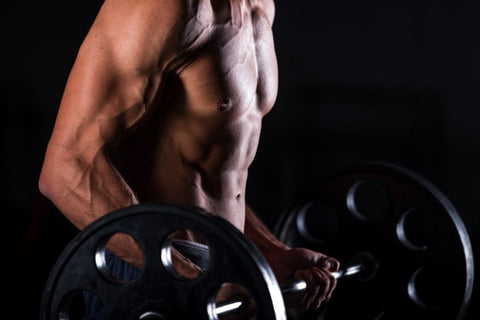

Thinking about sculpting your arms and getting a stronger physique? This comprehensive guide gives you everything you need to know about biceps and arm exercises, from the anatomy of the muscles involved to effective training programs. You'll discover why it's important to work your biceps, how to adapt your workout to your fitness level, and what equipment you can use to maximize your results.
Summary
-
Bicep exercises contribute to strength, stability, and injury prevention: They're not just for aesthetics – the biceps support functional movements and aid in upper body workouts.
-
The exercises can be adapted for any level and can be done with or without equipment: From push-ups with household objects to workouts with dumbbells, cables or bands, everyone can build an effective program.
-
Progress comes through variety, technique and consistency: Combining biceps and triceps exercises, using advanced techniques (drop-sets, isometrics, supersets) and monitoring your workouts lead to visible and lasting results.
content
-
Why are bicep exercises important?
-
Biceps anatomy and its role in training
-
Biceps exercises for beginners
-
Advanced biceps exercises for muscle mass
-
Biceps training with specific equipment
-
Biceps exercises without equipment
-
Combined biceps and triceps workout
-
Biceps workout program
Why are bicep exercises important?
When starting an arm workout, it's important to understand that biceps exercises aren't just for aesthetics. Strong biceps contribute significantly to shoulder stability and performance in other upper body exercises, such as pull-ups, rows, and chest presses.
Furthermore, the biceps are involved in many daily activities – from lifting shopping bags to supporting the body while climbing. Effective biceps training prevents muscle imbalances and reduces the risk of injury, especially when combined with triceps and shoulder exercises.
An important aspect of arm exercises is that they can be adapted to any fitness level and for any goal. Whether you want to tone your arms, gain muscle mass , or improve your functional strength, there are exercises that are right for you. For example, if you are a beginner, you can start with push-ups with light weights and high repetitions, and if you are advanced, you can use heavier weights and intensifying techniques.
Biceps anatomy and its role in training
To get the most out of your biceps exercises, it's helpful to understand the structure of this muscle. The biceps brachii has two heads—long and short—that are activated differently depending on the position of your arm. For example, push-ups with your arms forward stimulate the short head, while push-ups with your arms backward work the long head.
The biceps has two main functions: forearm flexion and supination (outward rotation). Therefore, exercises that combine both movements, such as dumbbell curls and rotations, are very effective.
A complete arm workout should also involve the brachialis and brachioradialis muscles, which help flex the elbow. Thus, it is important to vary the angles and types of exercises to stimulate all parts of the biceps and develop balanced strength.
Biceps exercises for beginners
If you're new to fitness, home biceps exercises are a practical and affordable choice. You don't need fancy equipment or a gym membership. All you need is motivation and a few simple moves that you can do right in your living room.
Flexions with household objects: bottles, backpack, books
One of the simplest exercises is flexion with household objects. You can use a water bottle, a can, or a backpack loaded with books.
-
Stand straight, with your feet shoulder-width apart.
-
Hold the weight in your hand, with your arm extended alongside your body.
-
Bend your elbow and slowly lift the weight towards your shoulder.
Do the movement in a controlled manner and focus on contracting your biceps at the top. Start with light weights (e.g. a 0.5 liter bottle) and gradually increase.
Arm exercises for women: Push-ups for toning and definition
Arm exercises for women have the same technical basis, but focus more on toning.
-
Use small weights (1-2 kg or light bottles).
-
Do 12–15 repetitions per set, focusing on proper form.
The goal is to define the muscle, not increase volume. This approach is ideal if you want to have lean, firm arms.

Isometric flexions: control and tension
A great exercise for beginners is the isometric flexion. It's simple but very effective for connecting the mind with the muscle.
-
Bend your elbow to 90 degrees.
-
Hold the position for 15–30 seconds.
-
Feel the tension in your biceps and maintain concentration.
You can add an elastic band for more resistance as you get stronger.
Door pull-ups: alternative without a bar
If you don't have access to a pull-up bar, you can try modified door pull-ups using a towel:
-
Wrap the towel around a closed, fixed door.
-
Hold onto your ends and lean back.
-
Pull yourself back slowly, with your feet resting on the floor.
It is a safe and progressive biceps exercise, ideal for at home.
The secret to success in arm exercises for home is to be consistent and advance gradually.
-
Start with 2–3 simple exercises.
-
He works out 2–3 times a week.
-
Perfect your form before adding weight or volume.
A proper start will provide you with a solid foundation for more advanced training in the future.
Advanced biceps exercises for muscle growth

Once you've laid the groundwork with simple exercises, it's time to move to a higher level. Advanced biceps exercises at the gym are designed to stimulate muscle growth and overcome periods when progress stagnates.
Concentrated dumbbell curls: maximum isolation
One of the most effective advanced exercises is the dumbbell curl.
-
Sit on the edge of a bench, with your legs apart.
-
Support your elbow on the inner side of your thigh.
-
Lift the dumbbell slowly to your shoulder, without balance or help from your torso.
This position eliminates momentum and activates the biceps in total isolation. Focus on maximum contraction at the top and controlled lowering of the weight.
Cable pull-ups: constant tension
Another advanced exercise is the low cable curl, which maintains tension on the biceps throughout the movement.
-
Position yourself in front of the pulley, with the cable set low.
-
Grasp the handle with an overhand grip (palm up).
-
Perform slow and controlled flexions, almost to the shoulder.
Unlike dumbbells, the cable keeps the muscle under tension even at the base of the movement, leading to a more efficient contraction and a full stretch.
Preacher bench press: total control
For those who want to test their limits, the preacher bench press is the ideal choice.
-
The bench positions the arm at a fixed angle, eliminating any possibility of cheating.
-
This restriction makes the biceps work harder, especially in positions of mechanical weakness.
It is a demanding exercise, but extremely effective for developing muscle mass and strength throughout the entire range of motion.
Drop-set: strength technique for overcoming plateaus
If you want to overcome stagnation, you can use the drop-set technique in your training.
-
Start with a heavy weight and do repetitions until exhaustion.
-
Immediately lose weight by 20-30% and continue without a break.
-
Repeat until you can't do any more repetitions.
This method intensifies muscle strain and can be an excellent stimulus for mass growth. However, use it in moderation to avoid overexertion.
Advanced biceps exercises require more control, technique, and intensity. The key to progress is a combination of:
-
Correct muscle isolation,
-
Constant tension in motion,
-
Intensification techniques such as drop sets.
If you follow form and listen to your body, these exercises will help you build strong, well-developed arms.

Biceps training with specific equipment
Using the right equipment can completely transform a biceps workout. These tools allow you to work the muscle from various angles and at controlled intensities, stimulating complete muscle development.
Z-bar: comfort and efficiency
The Z-bar for biceps is ideal for those who want a natural grip and easier on the wrists. The curved shape allows for flexions without discomfort and reduces stress on the joints.
It is effective for both standing push-ups and preacher and reverse grip exercises. If you use fitness belts during execution, you can maintain correct posture and protect the lumbar area during heavy sets.
Dumbbells: free movement and muscle balance
Dumbbell exercises for the arms offer greater freedom of movement than barbells. They allow each arm to work independently, which helps correct muscle imbalances.
Alternating push-ups, Hammer push-ups, and concentrated push-ups are just a few of the useful options you can integrate into a varied and balanced arm workout.
Cable machines: continuous tension for biceps
The cables maintain constant tension in the muscles throughout the movement. You can set the cable low, mid, or high to stimulate the biceps from different angles.
The combination of cables and classic exercises helps progress and provides added intensity. For stability during heavier sets, you can use fitness mats , which reduce the risk of slipping and provide firm support.
Resistance bands: versatile and affordable
Although simpler, resistance bands are great for biceps exercises both at home and on the go. They offer variable resistance and can be used for warm-ups, muscle activation, or even rehabilitation.
You can combine the bands with other fitness accessories such as handles, door anchors, or circular bands for more workout options.
Biceps exercises without equipment
Even if you don't have access to the gym, you can build an effective workout using just your body weight or items at home.
Push-ups for biceps: smart adaptation
By changing your hand position, you can turn the classic push-up into a biceps-building exercise. Palms facing your feet and elbows close to your torso direct the tension onto your forearms.
This variation can be done anywhere and does not require any equipment.

Bodyweight pull-ups
Overhead pull-ups (palms facing you) are one of the most effective bicep exercises. If you can't do a full pull-up yet, you can start with negative or band-assisted pull-ups.
As you progress, you can try more difficult variations, such as narrow-grip or single-handed pull-ups.
Isometrics and improvisation
Isometric exercises are a simple way to stimulate your biceps without weights. Keep your elbow at 90 degrees and create resistance with your other hand for 15–30 seconds. Repeat with both arms.
You can also use household items – a backpack full of books, water bottles, or even a small child (in a safe place) – to create weight. Creativity is key!
Combined biceps and triceps workout
For maximum effectiveness, combine biceps and triceps exercises in the same session. This method saves time and promotes balanced arm development.
Antagonist supersets
The biceps and triceps are antagonistic muscles – when one contracts, the other relaxes. You can take advantage of this principle by alternating flexions with extensions, without a break in between.
For example, perform barbell curls, immediately followed by cable triceps extensions. The 60-90 second break comes only after both exercises.
Variation and intensity
Constantly change machines, weights, or angles to maintain progress. Include compound and isolation exercises, with varying levels of difficulty.
A balanced biceps and triceps workout reduces the risk of injury and stimulates the release of muscle growth hormones. You can support this process with supplements for athletes , such as pre-workout supplements for energy and post-workout supplements for recovery.
Biceps workout program
An effective program isn't just random exercises. It's a plan based on your progression, recovery, and goals.
Basic structure for beginners
If you're just starting out, work your biceps twice a week, with 3-4 exercises, 3 sets of 8-12 reps. Leave 48-72 hours between sessions for full recovery.
Advanced: intensity and special techniques
As you progress, you can introduce techniques like drop-sets, super-sets, or rest-pause. These methods add variety and push the muscle beyond what is normal.
However, use them in moderation and pay close attention to recovery. Using fitness belts can help you maintain proper form during complex exercises and reduce stress on your joints.
Monitoring and adjustment
Keep a training journal: note down weights, reps, and fatigue levels. This will help you adjust your program based on your progress and avoid stagnation.

An effective arm workout is based on consistency, variation, and attention to detail. Adapt the exercises to your level, use the equipment correctly, and don't forget to recover properly.
For optimal results, support your workouts with sports supplements, equip yourself with the right fitness accessories, and create a comfortable space. This way, you will have safe, effective workouts and visible progress.
Photo source: Freepik.com