

Author: Irina Nedelcu, Co-owner and Chief Operating Officer at Nutriland, food management and safety specialist
Updated: November 11, 2026
1RM (one-repetition maximum) is the maximum weight you can lift once with proper technique for an exercise. The calculator estimates it from a regular set, without the need to test your maximum weight, and shows you the weights for the percentages used in training programs.
Quick answer
- Enter the weight and number of repetitions from a set performed close to failure; the estimate is best at 3-8 repetitions.
- We use the average of the Epley, Brzycki, and Lombardi formulas, rounded to 0.5 kg.
- For strength, you usually work at 80-90% of 1RM, for hypertrophy at 67-85%.
- The result is an estimate; it varies from one exercise to another and from one person to another.
Calculate your 1RM
How we calculate
We use three formulas validated in studies: Epley, weight × (1 + reps / 30); Brzycki, weight × 36 / (37 - reps); Lombardi, weight × reps to the power of 0.1. We display their average, rounded to 0.5 kg. The LeSuer study from 1997 showed that the formulas are more accurate for sets of under 10 repetitions, and Reynolds (2006) confirmed that a set of approximately 5 repetitions gives the best estimate.
For warming up and safe technique, follow a progressive training program and, if you are a beginner, work with a coach.
Percentages of 1RM and estimated repetitions
| % of 1RM | Estimated repetitions | Example at 1RM of 100 kg | Usually used for |
|---|---|---|---|
| 100% | 1 | 100 kg | maximum strength test |
| 95% | 2 | 95 kg | strength |
| 93% | 3 | 93 kg | strength |
| 90% | 4 | 90 kg | strength |
| 87% | 5 | 87 kg | strength |
| 85% | 6 | 85 kg | strength and hypertrophy |
| 83% | 7 | 83 kg | hypertrophy |
| 80% | 8 | 80 kg | hypertrophy |
| 77% | 9 | 77 kg | hypertrophy |
| 75% | 10 | 75 kg | hypertrophy |
| 70% | 11 | 70 kg | hypertrophy and muscular endurance |
| 67% | 12 | 67 kg | muscular endurance |
| 65% | 15 | 65 kg | muscular endurance |
Products and useful guides
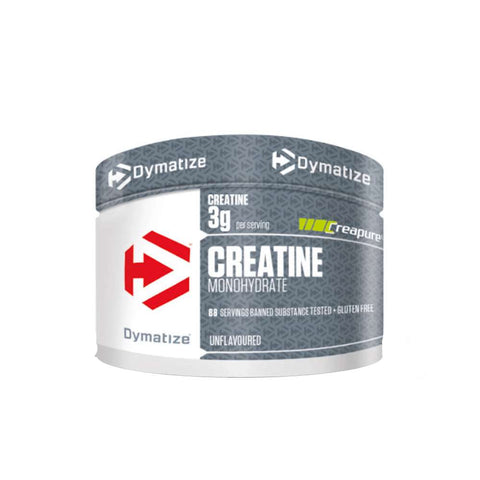
Creatine increases physical performance in successive efforts during short-duration and high-intensity physical exercises; the beneficial effect is obtained with a daily intake of 3 g of creatine. After age 55, daily creatine intake can enhance the effect of resistance training on muscle strength, training at least 3 times a week at 65-75% of 1RM, a range you can see directly in the calculator. A few options now available:
- Creatine monohydrate 300 g, Ostrovit
- Creatine monohydrate Creapure 300 g, Dymatize
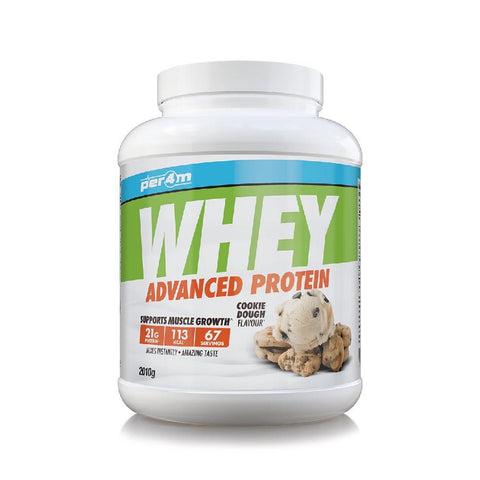
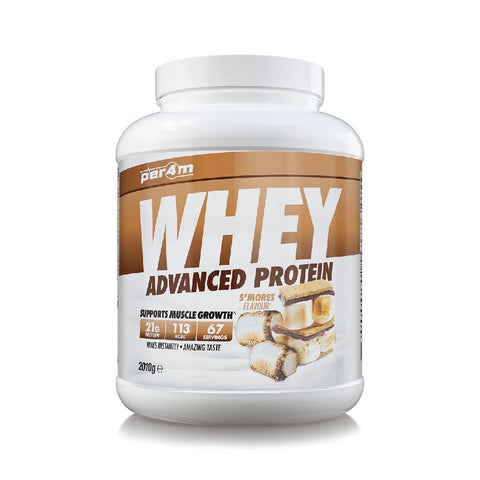
- Whey Protein 2 kg, Per4m
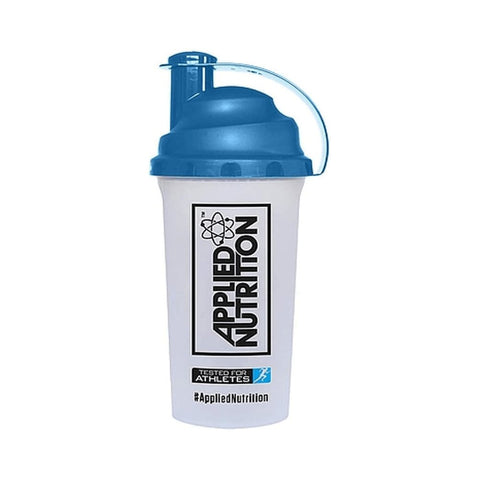
- Shaker 700 ml, Applied Nutrition
See also the creatine, protein and accessories categories. Also calculate your creatine dose and protein requirements.
Read also: Creatine: what the studies show, Supplements for beginners in the gym, Muscle mass after 50.
Sources
- Brzycki M (1993). Strength testing: predicting a one-rep max from reps-to-fatigue. JOPERD 64(1):88-90
- LeSuer DA and colab. (1997). The accuracy of prediction equations for estimating 1-RM performance in the bench press, squat, and deadlift. J Strength Cond Res 11(4):211-213
- Reynolds JM, Gordon TJ, Robergs RA (2006). Prediction of one repetition maximum strength from multiple repetition maximum testing and anthropometry. J Strength Cond Res 20(3):584-592
- American College of Sports Medicine (2009). Progression models in resistance training for healthy adults. Med Sci Sports Exerc 41(3):687-708
- EFSA (2016). Creatine in combination with resistance training and improvement in muscle strength. EFSA Journal 14(2):4400
Note: a varied and balanced diet and a healthy lifestyle are important. Follow the quantity and method of consumption on the product label and do not exceed the recommended daily dose. The products are not intended for children, pregnant or breastfeeding women; if you have a medical condition, consult your doctor before use.