
Author: Irina Nedelcu, Co-owner and Chief Operating Officer at Nutriland, food management and safety specialist
Updated: November 11, 2026
The calculator estimates how much fluid you lose through sweat during training and how much to drink before, during, and after exercise. For the most accurate result, weigh yourself before and after a typical workout and fill in the optional fields.
Short answer
- Before training: 5-7 ml/kg at least 4 hours before.
- During exercise: drink so that you do not lose more than 2% of your weight, but no more than you sweat.
- After: 1.25-1.5 L of fluid for every kg lost.
- Over the course of days, the EFSA guideline for total water intake is 2.0 L for women and 2.5 L for men, from all sources.
Calculate your training hydration
How we calculate
Sweat loss varies greatly from person to person, between approximately 0.3 and 2.4 L per hour, according to the ACSM position. Without weighing, we start with an average value for the chosen intensity (0.4-1.3 L per hour), adjusted for temperature. With weighing, the rate is calculated exactly: kg lost plus fluids consumed, divided by the duration in hours.
During exercise, the goal is not to lose more than 2% of body weight, without drinking more than you lose. After training, the recommendation of 1.25-1.5 L for every kg lost takes into account that some of the fluids are eliminated through urine. For exercise over 60 minutes, especially in the heat, the sodium lost through sweat also matters.
Carbohydrate-electrolyte solutions help maintain exercise endurance during prolonged physical activity and increase water absorption during physical exercise. The effect refers to drinks containing 80-350 kcal/L from carbohydrates and 460-1150 mg/L of sodium, with an osmolality of 200-330 mOsm/kg water; check these values on the drink label.
Guideline for one hour of training, at 70 kg
| Intensity | Estimated loss (moderate) | Estimated loss (hot) | What to drink during exercise |
|---|---|---|---|
| Light | 0.4 L | 0.5 L | as thirst dictates, in sips |
| Moderate | 0.7 L | 0.9 L | up to 0.7-0.9 L |
| Intense | 1.0 L | 1.3 L | up to 1.0-1.3 L |
| Very intense | 1.3 L | 1.7 L | up to 1.3-1.7 L; after 60 minutes, an electrolyte drink |
Products and useful guides
For long or hot-weather workouts, here are a few currently available options:
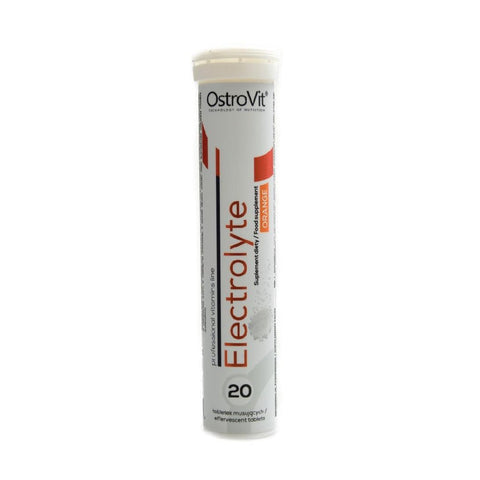
- Electrolytes, 20 effervescent tablets, Ostrovit
- Electrolytes, 20 effervescent tablets, AllNutrition
- Electrolyte sticks 50 g, AllNutrition
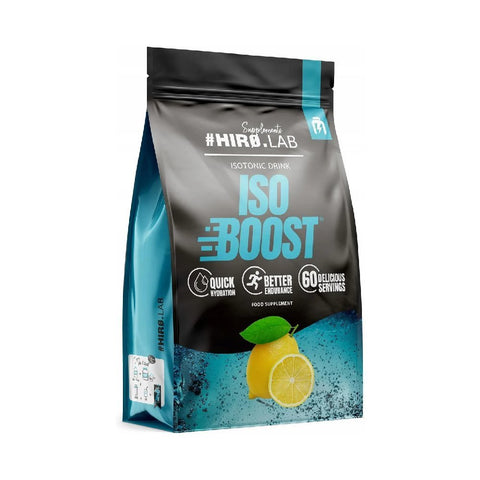
- Iso Boost 1.5 kg, Hiro Lab (isotonic drink)
See all products in the electrolyte category, intra-workout and carbohydrates. For daily calories, use the calorie calculator.
Read also: Electrolytes: what they are and how to choose the right option, Supplements for runners.
Sources
- EFSA (2010). Scientific Opinion on Dietary Reference Values for water. EFSA Journal 8(3):1459
- American College of Sports Medicine, Sawka MN et al. (2007). Exercise and fluid replacement. Med Sci Sports Exerc 39(2):377-390
- McDermott BP et al. (2017). NATA Position Statement: Fluid Replacement for the Physically Active. J Athl Train 52(9):877-895
- Shirreffs SM et al. (1996). Post-exercise rehydration in men: effects of volume consumed and drink sodium content. Med Sci Sports Exerc 28(10):1260-1271
- Thomas DT, Erdman KA, Burke LM (2016). Nutrition and Athletic Performance. Med Sci Sports Exerc 48(3):543-568
Note: a varied and balanced diet and a healthy lifestyle are important. Follow the quantity and method of consumption on the product label and do not exceed the recommended daily dose. The products are not intended for children, pregnant or breastfeeding women; if you have a medical condition, consult your doctor before use.