
Are you tired of monotonous workouts and want to add some dynamism and efficiency? The medicine ball is the answer! This versatile tool helps you improve your strength, balance and coordination, transforming ordinary exercises into complex challenges. In this guide, you will discover how to choose the right ball, what benefits training with it offers and, above all, a series of specific exercises for each muscle group. Get ready to take your workouts to a new level!
Summary
-
The medicine ball is a versatile tool that combines strength, balance, and coordination training, being useful in both fitness and recovery.
-
Choosing the correct weight is essential for safety and efficiency , depending on your level of training and form of execution.
-
Medicine ball exercises activate the entire body , improve posture, burn calories and can be adapted for any fitness level.
content
-
What is a medicine or physiotherapy ball and how do you choose the right one for training?
-
The benefits of training with a fitness ball - balance, strength and effective exercises
-
Medicine ball exercises for the abdomen and core - strength, stability and control
-
Arm and shoulder workout with medicine ball - exercises for strength and tone
-
Exercises for legs and buttocks with medicine ball - stability, tone and strength
-
Medicine ball exercises for the spine - mobility and correct posture
What is a medicine or physiotherapy ball and how do you choose the right one for training?
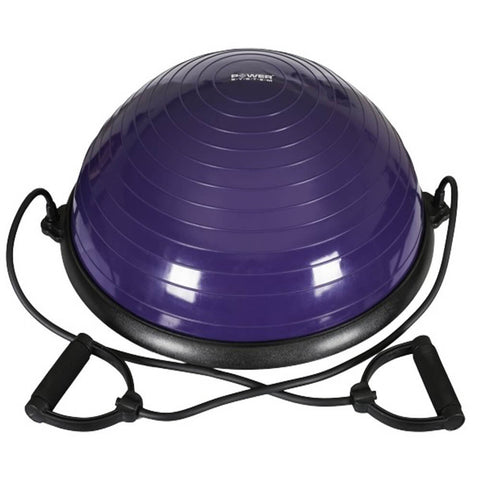
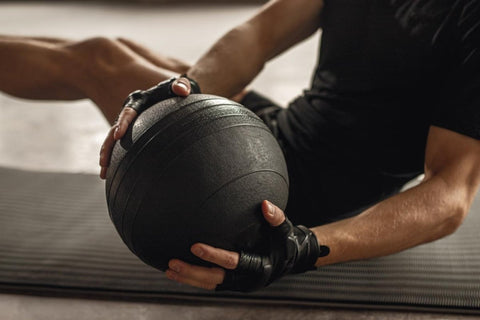
The medicine ball, also known as a physiotherapy ball, is a versatile and effective accessory for strength, balance and coordination training. It has a variable weight, between 1 kg and 15 kg (or more), and is filled with dense materials, such as sand, gel or granules. Its compact design and evenly distributed weight transform simple exercises into functional movements, with complex muscle involvement and increased trunk control.

It is used both in fitness training and in medical recovery, developing explosive strength and improving coordination.
What accessories can you use to complete your medicine ball training?
For a complete and comfortable experience, medicine balls can be used in conjunction with other useful accessories , such as fitness mats , which provide support during floor exercises and protect joints. This way, you can create a safe and effective training space, even at home, tailored to your mobility, strength and recovery goals.

How do you choose the right weight?
Choosing the right weight is essential for effective and safe training. Here are some quick pointers:
-
Beginners: 2–4 kg – easy to control, suitable for learning technique.
-
Intermediate level: 5–8 kg – adds intensity without compromising form.
-
Advanced / athletes: 10 kg or more – for dynamic and challenging exercises.
A good rule of thumb is to be able to perform 10 to 15 repetitions of an exercise while maintaining proper form throughout the movement. If you lose control or the movement becomes jerky, the weight is too heavy.
The benefits of training with a fitness ball - balance, strength and effective exercises
Medicine ball exercises offer a number of benefits that make them valuable in any training program. One important advantage is the development of functional strength - the strength that helps you in everyday activities. Unlike isolated weight exercises, fitness ball exercises involve multiple muscle groups at the same time, imitating the body's natural movements.
Medicine ball training significantly improves stability and balance. Each exercise requires the activation of the deep core muscles to maintain correct posture, which leads to better coordination and body control. This improved core stability is reflected in better performance in other sports and physical activities.

Another important benefit is the versatility of the exercises. The medicine ball can be used for cardiovascular training, strength development, mobility improvement and even recovery. The exercises can be adapted for all fitness levels. Also, training with the medicine ball helps you burn calories because it involves the whole body.
Support your training with the right supplements
To get the most out of the benefits offered by medicine ball exercises, it is important to support your physical effort with supplements for athletes , tailored to your needs and activity level.
Before training, pre-workout supplements can provide extra energy, focus and endurance, helping you achieve optimal performance. After the exercise session, post-workout supplements contribute to muscle recovery, reduce fatigue and support long-term progress.
By combining functional training with proper nutrition and smart supplementation, you will achieve faster and more lasting results.
Medicine ball exercises for the abdomen and core - strength, stability and control
The abdomen and core benefit significantly from medicine ball training due to the dynamic and functional nature of the exercises. These movements not only engage the frontal area of the abdomen, but also the obliques, lumbar and stabilizer muscles, which contributes to improved posture, balance and overall strength.

Core fitness ball exercises are much more varied than simple crunches – they include rotations, extensions, and lateral movements that activate all layers of the core muscles.
Russian twist with medicine ball – for obliques and active core
An excellent exercise for rotational strength is the Russian twist. Here's how to do it correctly:
-
Sit on the ground, with your knees bent and your feet slightly elevated.
-
Hold the medicine ball with both hands, in front of your chest.
-
Rotate your torso left and right, keeping your back straight.
The movement should start from the torso, not the arms. It is ideal for activating the abdominal obliques and improving lateral stability.
High ball crunch – strength and coordination
This exercise combines abdominal contraction with a pushing movement, also involving the arms:
-
Lie on your back, with your knees bent.
-
Hold the ball with both hands at your chest.
-
Lift your torso towards your knees, pushing the ball up at the end.
It is an effective crunch variation that adds intensity and also involves the upper body.
Ball-supported plank – for stability and control
For a more advanced workout, try the medicine ball side plank:
-
Lean on your left forearm and place your right palm on the ball.
-
Keep your body in a straight line and your torso stable.
-
Alternate hand positions to activate both sides of the body.
This exercise intensely works the stabilizing muscles of the trunk and is excellent for balance and muscle control.
Medicine ball exercises for the abdomen and core are effective, dynamic, and adaptable to any fitness level. Integrating them into your routine will help increase core strength, improve posture, and prevent muscle imbalances.
Arm and shoulder workout with medicine ball - exercises for strength and tone
Arms and shoulders respond well to medicine ball or physiotherapy ball exercises, thanks to the variable resistance and freedom of movement that this accessory offers. Unlike classic weights, the ball allows for quick and functional movements, which not only develop strength, but also speed, power and muscle control.

It is ideal for both basic training and dynamic routines or circuit exercises.
Overhead Push-ups – Strength and Stability
An essential exercise for the shoulders and triceps is pushing the ball over your head:
-
Stand with your feet shoulder-width apart.
-
Hold the ball with both hands at your chest.
-
Push the ball up, fully extending your arms.
-
Slowly lower to the starting position.
For added intensity and control, you can perform the movement from a squatting position, also activating the stabilizing muscles of the trunk and legs.
Wall throwing – power and coordination
An explosive exercise for the upper body is throwing the ball against the wall:
-
Position yourself about one meter away from a solid wall.
-
Hold the ball at chest level.
-
Throw it with force and catch it on the return.
This movement develops arm strength, improves hand-eye coordination, and engages the entire upper muscle chain (shoulders, chest, back, core).
Bicep curls – tone and control
To tone your biceps and forearms, try simple ball push-ups:
-
Hold the ball with both hands, arms extended downward.
-
Lift the ball towards your chest by bending your elbows.
-
Maintain control both on the climb and the descent.
It is an accessible yet effective exercise, especially when performed with control and correct form.
Medicine ball exercises for arms and shoulders combine strength, mobility and dynamism, making them an ideal choice for those who want a complete workout that is different from the classic weight routine. Include them in your program and you will notice a visible improvement in tone and stability in the upper body.
Exercises for legs and buttocks with medicine ball - stability, tone and strength
The legs and glutes deserve special attention in any training program, and using a medicine ball is a real bonus to these exercises. By adding instability and resistance, this type of training stimulates deep muscle activation and simultaneously improves strength, balance, and coordination.

Medicine ball squats – the foundation of lower body strength
A basic exercise, ideal for thighs and buttocks, is the medicine ball squat:
-
Hold the ball with both hands at chest level.
-
Position your feet shoulder-width apart.
-
Lower into a squat, keeping your back straight and your weight on your heels.
-
Return to the starting position in a controlled manner.
For a more advanced level, you can throw the ball up at the end of the movement and catch it as soon as you return to the squat. This way, you also add an explosive strength and coordination component.
Lunges with rotation – stability in movement
A complete and challenging exercise is the rotational lunge, which requires several planes of movement:
-
Hold the ball at abdominal level.
-
Do a forward lunge with your right leg.
-
As you descend, rotate your torso toward your front leg.
-
Come back and repeat on the other leg.
This exercise is excellent for strength, core control, and hip stability, and is also ideal for functional training.
Step-up with medicine ball – strength and functionality
For an effective glutes workout, try medicine ball step-ups:
-
Use a stable platform.
-
Hold the ball to your chest and step up with one foot, then lower in a controlled manner.
-
Alternate legs with each repetition.
For a more intense variation, push the ball overhead when you reach the raised position. This variation also involves the arms, turning the exercise into a full-body workout.
Leg and gluteal exercises with a medicine ball not only build strength, but also improve control, posture, and functional ability in daily activities. Integrate these movements into your routine for visible progress and a more balanced body.
Medicine ball exercises for the spine - mobility and correct posture
Last but not least, the spine is the center of your posture and mobility. Back exercises with a medicine ball help develop strong muscles that support your spine in all planes of motion. These exercises are essential for good posture, preventing back pain, and maintaining musculoskeletal health, especially in the context of a sedentary lifestyle.
Back Extensions – Improved Strength and Posture
Medicine ball back extensions are excellent for strengthening the back area:
-
Lie on your stomach, with your arms extended in front of you and the ball in your hands.
-
Raise your chest and arms simultaneously, keeping your gaze on the floor.
-
Slowly return to the starting position.
This movement activates the spinal muscles and counteracts the effects of the hunched position at the desk, contributing to correct postural alignment.
Trunk rotations – mobility and release
For a mobile and healthy spine, include seated trunk rotations:
-
Stand with your knees bent and the ball held in both hands.
-
Rotate your torso left and right, keeping your back straight.
-
Movements should be slow and controlled.
This exercise improves thoracic mobility, reducing tension accumulated in the mid-back area - frequently affected by prolonged sitting at a desk.
Dead bug with ball – stability and lumbar control
An extremely effective exercise for the lumbar area is the dead bug variation with a medicine ball:
-
Lie on your back, with your knees bent at 90 degrees and the ball above your chest.
-
Alternately lower one leg to the ground, maintaining the ball position and neutral lumbar area.
-
Perform the movement slowly, focusing on activating your core.
This variation trains coordination between the trunk and hips, making it ideal for improving core stability and preventing lower back pain.
In conclusion, the medicine ball is an excellent tool to diversify your workouts and improve your strength, stability and mobility. Whether you use it for core exercises, legs or even specific movements with a hand therapy ball, the benefits are real and adaptable to any level of training.
Experiment with the exercises presented, adapt them to your fitness level and integrate them into your weekly routine. You will quickly notice an improvement in physical performance and an overall feeling of well-being. Remember: consistency is the key to success!
Photo source: Freepik.com.