
A well-worked abdomen is not only aesthetically pleasing, but also an essential component for the stability of the entire body, injury prevention and improved physical performance. In the context of an active lifestyle, abdominal exercises play an essential role, both in strength training and in functional or endurance training.
This guide gives you a clear and applied perspective on the most effective abdominal exercises, explaining how and why they work. Whether you're a beginner or looking to optimize your current program, you'll find useful information here about the muscle groups involved, correct execution techniques, and smart ways to integrate these exercises into your training routine. The goal is clear: strong, defined, and functional abs.
Why are abdominal exercises important and what muscles are involved?
A strong core is more than just an aesthetic ideal – it is the foundation of stability and mobility for the entire body. Understanding the role of the abdominal muscles and how they work together is essential to building an effective and balanced training program.
Abdominal exercises are fundamental not only for your aesthetic appearance, but also for the overall health and functionality of your body. Strong abs improve your posture, reduce the risk of lower back pain, and increase spinal stability. In addition, these exercises play a crucial role in improving athletic performance and functionality in everyday life.

The main muscle groups involved in abdominal exercises include the rectus abdominis muscles, responsible for the "six-pack" look, the laterally located oblique muscles, which help rotate the torso, the transverse abdominis muscle, the deepest muscle layer essential for spinal stability, and the iliopsoas muscles, which connect the spine to the lower limbs and are important in hip flexion.
These muscle groups work in synergy to provide stability, flexibility, and strength to the entire body. A well-structured exercise program should target all of these areas for optimal results, creating a strong core that supports all of your daily movements.
By training all the abdominal muscle groups in a balanced way, you contribute to a more stable, functional and resilient body. It is the first step towards performance, prevention and a long-term active lifestyle.
Abdominal exercises - how to start correctly if you are a beginner
For those just starting out in ab training, it's essential to build a solid foundation based on proper technique and gradual progression. A balanced start helps you avoid injuries and achieve sustainable results in the long term.
Before you begin, assess your current fitness level and set realistic goals, depending on what you want: toning, stability, or improved posture. In the initial phase, focus on easy abdominal exercises that emphasize movement control and effective core activation.
Exercises like modified planks, partial crunches, and bird dogs are recommended for both men and women as part of a beginner abdominal workout routine. They allow you to learn the correct movement without overexerting yourself, making them ideal for developing core strength.
As you gain more strength and control, you can gradually increase the number of sets and the difficulty of the exercises. Integrate these movements into a broader fitness program, along with cardiovascular training and other functional exercises, for harmonious development.

Several studies in the field of sports performance suggest that developing core stability is at least as important as muscular strength. Exercises that involve control and balance, such as planks, dead bugs, and anti-rotation movements, help prevent injuries and increase the efficiency of functional movements. A balanced program should include both dynamic and static movements for complete results.
Progress comes through consistency, attention to detail, and patience. With a structured approach tailored to your level, you'll build not only a stronger core, but a solid foundation for your entire fitness journey.
Top 10 abdominal exercises - correct techniques and essential benefits
Well-chosen and correctly executed exercises can make the difference between an effective workout and an ineffective one. Below you will find a selection of the most effective abdominal exercises, suitable for all levels of fitness.
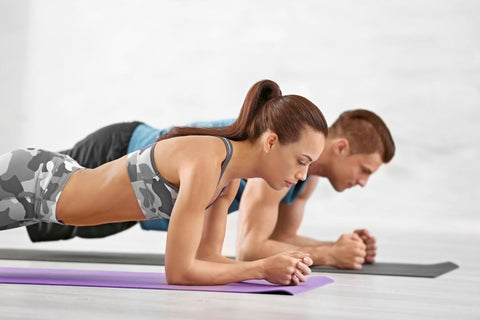
1. Plank: Keep your body straight, with your elbows under your shoulders and your abs tight. This exercise strengthens your entire core and improves posture.
2. Crunches: Lift only your shoulders off the ground, without pulling on your neck. They directly target your rectus abdominis muscles, helping to define them.
3. Mountain Climbers: Hold a plank position while alternately bringing your knees to your chest. Combine cardiovascular training with abdominal toning.
4. Russian Twists: Stand in a V position, rotating your torso from side to side. Works your obliques and improves trunk rotation.
5. Leg Raises: Raise your legs straight off the ground, keeping your lower back flat on the floor. Great for the lower abs.
6. Bicycle Crunches: Alternate bringing the opposite elbow to the bent knee. Works the upper and lower abs and obliques simultaneously.
7. Dead Bug: Lying on your back, alternately lower your opposite arm and leg. Improves spinal stability and coordination.
8. Pallof Press: Standing sideways to a cable or elastic resistance band , push forward while resisting rotation. Strengthens the stabilizing muscles of the trunk.
9. Dragon Flag: Raise your body straight, supporting yourself only on your shoulders, lowering in a controlled manner. An advanced exercise that works the entire core intensely.
10. Ab Wheel Rollout: Using an ab wheel, extend your body forward and back in a controlled manner. It works your abs intensely and improves shoulder stability.
To maximize the benefits of these exercises, focus on proper technique and gradually progress in difficulty and number of repetitions. Make sure to breathe correctly and maintain tension in the abdominal area throughout the movement.
Regardless of your level, the key to progress is consistency and attention to form. Start with variations that are right for you and gradually increase the difficulty to achieve lasting and safe results.
Abdominal exercises at home vs. at the gym - advantages and practical differences
Whether you choose to work out at home or at the gym, both options can effectively support the development of strong and defined abs. The differences between them are more about personal context, available resources, and how you structure your routine.
The choice between home and gym workouts depends on your personal preferences and fitness goals. Home workouts offer flexibility, time and money savings, and privacy for those who feel uncomfortable in a gym environment. However, it requires creativity to vary exercises with limited equipment.
On the other hand, training at the gym gives you access to specialized equipment, the opportunity to receive advice from professional trainers, and a motivational environment. You have a greater variety of exercises and progression options at your disposal.
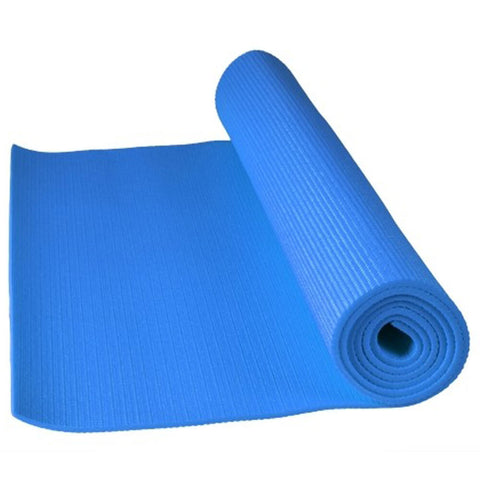
Regardless of your choice, you can achieve great results both at home and at the gym. The key is consistency and proper technique. For those interested in working out at home, there is a wide range of fitness belts that can provide additional support during exercises, and training mats that can improve your comfort and stability during floor exercises. These accessories can increase the effectiveness of your abdominal workouts, giving you extra motivation and visible results.

Remember: progress comes from discipline, proper technique, and constant adaptation of your training. Use the resources at your disposal and build a program that works for you.
Exercises for a flat stomach - what really works and what doesn't?
Achieving a flat stomach requires a multifaceted approach. What really works includes creating a moderate calorie deficit, combining cardiovascular and resistance exercise, and a full-body workout. A balanced diet rich in whole foods and lean protein, as well as adequate hydration, are essential.
It is important to understand that you cannot specifically target abdominal fat with localized flat stomach exercises. The myth of localized fat reduction has no scientific basis. Also, relying exclusively on abdominal exercises or extreme diets will not lead to the desired long-term results.
Research clearly shows that you can't reduce fat in a specific area of your body just by doing exercises that target that area. So-called "spot reduction" is a common but unfounded myth. For a flat, defined stomach, it's essential to combine a balanced diet, general physical activity, and strength training, not just abdominal exercises.
Lasting results come from consistency, balance, and a complete lifestyle approach. Don't just focus on aesthetics – a flat stomach is, first and foremost, a sign of health and discipline.
Abdominal training - how to create an effective and balanced program
An effective abdominal training program is not limited to a few isolated exercises. It must be strategically constructed, considering frequency, structure, and progressive adaptation to each individual's level of training.
For lasting results, train your abs 2-3 times a week, allowing at least one day of rest between sessions for muscle recovery. It's important to include exercises that target all the major muscle groups: the rectus abdominis, obliques, lower abs, and the deep core muscles responsible for stability.
A complete workout can be structured like this:
-
Dynamic warm-up – activating the core area and preparing the joints;
-
Stability exercises (e.g. plank, dead bug);
-
Targeted movements for different abdominal groups (crunches, leg raises, Russian twists, etc.);
-
Final stretching – for flexibility and reducing muscle tension.
As you progress, gradually increase the volume, intensity, and complexity of the exercises, but always maintain the focus on correct execution.
Integrate abdominal training into a complete routine that also includes resistance and cardiovascular exercises. This way, you will not only support abdominal toning, but also functional balance and overall body performance.
Abdominal exercises - how the approach differs for men and women
While the fundamentals of ab training are the same for everyone, the way men and women structure their programs differs based on their goals, lifestyle, and personal preferences. These differences aren't about hard and fast rules, but rather about priorities and nuances in approach.

Men often focus on exercises that promote muscle hypertrophy – that is, increasing muscle mass and definition of the abdomen – choosing high-intensity workouts that also support efficient fat burning. In this context, abdominal exercises for men, such as weighted crunches, ab wheel rollouts or dragon flags, are often included to achieve a well-defined abdomen. Dumbbell abdominal exercises are also popular, which add additional resistance and stimulate the development of deep muscles. The emphasis is often on the upper abdominal area and on increasing volume through weights or controlled repetitions.
In contrast, women tend to focus more on core stability and functionality, choosing exercises that engage the lower abs and obliques to maintain or accentuate a toned, slim waist. Many of these routines incorporate resistance training and dynamic movements that support metabolic activation and postural balance.
Regardless of gender, the key to success lies in personalizing your training based on your goals and consistency in implementation. Adapting your routine to your own needs and preferences is more important than any generalized gender differences. What really works is consistency, correct technique, and progressive evolution.
How do you combine diet and exercise for a visible and toned abdomen?
Defining your abdominal muscles requires more than just physical training – it requires a rigorous nutritional approach aligned with your body composition goals. Strategically combining nutrition with the right exercises is fundamental to reducing body fat and enhancing muscle tone.
Create a moderate calorie deficit of 300-500 calories per day to reduce body fat. Consume quality protein (1.6-2.2 grams per kilogram of body weight) to support muscle development.

Include complex carbohydrates and healthy fats in your diet for energy and optimal hormonal function. Stay adequately hydrated by drinking at least 2-3 liters of water per day. Time your diet with your workouts by eating a meal rich in protein and carbohydrates 1-2 hours before your workout.
To support your physical effort and recovery, you can consider using original supplements. Before training, pre-workout supplements can provide energy and focus. After training, post-workout supplements can help with muscle recovery and reduce fatigue. Used correctly, they can effectively complement your abdominal training routine, helping you achieve faster results and maintain your motivation.
By integrating a balanced diet, adapted to physical effort and supported by a well-structured training strategy, you can achieve a visible and functional abdomen. Results appear when nutrition and training act synergistically and are sustained over the long term.
In conclusion, achieving and maintaining a strong, well-defined abdomen requires a holistic approach that combines effective abdominal exercises, a balanced diet and an active lifestyle. Behind a toned abdomen is not only physical effort, but also a smart strategy, supported by scientific data. An effective workout must combine strength, stability and control, and reducing abdominal fat comes from an integrated approach – not from quick fixes or localized exercises.
Lasting results come through consistency, patience, and progressive adaptation. Integrate abdominal exercises into your daily routine, vary your workouts to avoid monotony, and stay motivated by focusing on the real and lasting benefits: improved posture, reduced lower back pain, and increased overall physical performance.
Keep in mind that everyone is different – so tailor the recommendations to your goals and fitness level. And if you have any medical conditions or persistent pain, seek professional advice before starting a new exercise program.
reference
-
Vispute, SS, Smith, JD, LeCheminant, JD, & Hurley, KS (2011). The effect of abdominal exercise on abdominal fat. Journal of Strength and Conditioning Research, 25(9), 2559-2564.
-
Hibbs, AE, Thompson, KG, French, D., Wrigley, A., & Spears, I. (2008). Optimizing performance by improving core stability and core strength. Sports Medicine, 38(12), 995-1008.
Photo source: Shutterstock.com.