
If you are passionate about fitness and a healthy lifestyle, you have probably heard about the importance of selenium for the body. This essential mineral plays an important role in numerous metabolic processes and vital functions. In this article, you will discover the benefits of selenium, the natural sources from which you can get it, as well as the signs that may indicate a deficiency. You will also learn how to use selenium supplements correctly and what are the risks of excessive consumption. Whether you are interested in optimizing your sports performance or just maintaining your general health, information about selenium will help you make the right decisions for your nutrition.
What is selenium and its role in the body?
Selenium is an essential trace element for health, needed in small but vital amounts. This mineral plays an important role in numerous metabolic processes and functions in the body. It is a key component of selenoproteins, enzymes with an antioxidant role that protect you against oxidative stress. Selenium also contributes to DNA synthesis and supports optimal thyroid function. Another important benefit is strengthening the immune system, helping you fight infections more effectively.
The main functions of selenium in the body include its strong antioxidant action, through which it neutralizes free radicals and prevents cellular damage. At the same time, selenium stimulates the production of antibodies and the activity of immune cells, thus supporting the immune system. It is also essential for the regulation of thyroid function, being necessary for the synthesis and metabolism of thyroid hormones. Last but not least, selenium offers cardiovascular protection and supports fertility, improving sperm quality in men.

Health benefits of selenium
Beyond its essential role in the basic functioning of your body, selenium offers a number of additional health benefits. First, it contributes to heart and circulatory health by reducing vascular inflammation and improving blood vessel elasticity. Studies have shown that optimal levels of selenium in the body are associated with a reduced risk of cardiovascular disease.
Selenium also plays an important role in maintaining brain health. It protects neurons against oxidative stress and supports the production of neurotransmitters. There is evidence that it may reduce the risk of age-related cognitive decline. In addition, selenium has anticancer potential, inhibiting the proliferation of cancer cells and stimulating apoptosis in tumor cells. It may reduce the risk of certain types of cancer, especially prostate cancer.
Another major benefit of selenium is improving thyroid function. In addition to its role in thyroid hormone synthesis, selenium protects the thyroid gland from oxidative stress and may help reduce inflammation in autoimmune thyroiditis. It helps convert T4 into T3, the active form of thyroid hormone.
Last but not least, selenium strengthens the immune system, stimulating the production and activity of immune cells and increasing the immune response to infections. That's why you often find it in the range of immunity supplements , along with vitamins C, D or E.
Natural sources of selenium
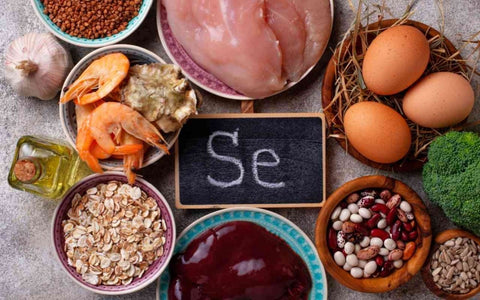
To reap the benefits of selenium, it's important to know what foods you can get it from. Top food sources of selenium include Brazil nuts, which are the richest source—a single nut can contain up to 95 mcg of selenium. Other good sources include sunflower and pumpkin seeds. Fish and seafood like tuna, sardines, mackerel, and mussels are also rich in selenium.
Meat and organ meats are another important source. Beef liver, chicken, pork, and lamb all contain significant amounts of selenium. Eggs, especially the yolk, are an excellent source. Among dairy products, cheese and yogurt contain selenium. Whole grains such as whole wheat bread and brown rice can provide you with this mineral. Last but not least, vegetables such as garlic, onions, mushrooms, and broccoli contain selenium in moderate amounts.
To ensure adequate selenium intake through your diet, include a variety of these foods in your daily menu. Opt for whole foods and minimally processed foods. Also, consume local products, but also foods from different geographical regions to benefit from variations in selenium content. It is recommended to associate selenium sources with foods rich in vitamin E, for a synergistic action of the two.

Organic selenium: benefits and uses
Organic selenium refers to selenium compounds that are bound to organic molecules, especially amino acids. The most common forms of organic selenium are selenomethionine, selenocysteine, and methylselenocysteine. These forms are found naturally in foods and are considered more bioavailable than inorganic forms of selenium.
Organic selenium has several significant advantages over inorganic forms. First, your body absorbs and retains it more efficiently. There is also a lower risk of overdose and adverse effects with organic selenium. It can be incorporated into your body's proteins, creating a long-term reserve. Last but not least, organic selenium has increased bioavailability, making it easier for the body to use in metabolic processes.
Recommended daily intake of selenium
To benefit from the benefits of selenium without risk, it is essential to know the recommended daily allowance. For adults (men and women over 19 years old), this is 55 micrograms (μg) per day. Pregnant women need 60 μg per day, and those who are breastfeeding need 70 μg per day. For adolescents (14-18 years old), the recommended allowance is also 55 μg per day.
It is important to note that individual selenium requirements can vary depending on several factors. Your health conditions, especially thyroid conditions, may increase your selenium requirements. If you are vegetarian or vegan, you may need to be extra careful to ensure you get the necessary intake. The geographic area in which you live can also influence the selenium content of foods.
To avoid toxicity, you should not exceed certain limits in your selenium intake. For adults, the upper safe limit is 400 μg per day. Exceeding this limit can lead to selenosis, a condition characterized by symptoms such as hair loss, brittle nails, and gastrointestinal problems. It is recommended to obtain selenium primarily from dietary sources and to consult a doctor before starting any supplementation.
Symptoms of selenium deficiency
Recognizing the symptoms of selenium deficiency is essential to prevent long-term complications. Selenium deficiency can have a variety of effects on the body, affecting multiple systems and functions. Among the main signs of selenium deficiency is thyroid dysfunction. You may experience symptoms of subclinical or overt hypothyroidism, or a worsening of symptoms in the case of Hashimoto's thyroiditis.
Another important sign of selenium deficiency is a weakened immune system. You may notice an increased susceptibility to infections and slower recovery from illness. Cardiovascular problems may also occur, such as an increased risk of atherosclerosis. In terms of cognitive function, you may experience difficulty concentrating and memory, as well as confusion.
Selenium deficiency can also affect your physical appearance. You may notice changes in your skin, hair, and nails, such as dry, flaky skin, thinning and brittle hair, and brittle, slow-growing nails. Last but not least, chronic fatigue and lethargy can be indicators of a selenium deficiency. If you notice any of these symptoms, it is important to see a doctor for a full evaluation.
Selenium and the thyroid: an important connection
The relationship between selenium and the thyroid gland is important for your endocrine health. The thyroid gland contains the highest concentration of selenium per gram of tissue in your entire body, highlighting the critical importance of this mineral for thyroid function. Selenium is an essential component of the deiodinase enzymes, responsible for converting the T4 hormone into the active T3.
The benefits of selenium in thyroid conditions are significant. In the case of Hashimoto's thyroiditis, selenium supplementation can lead to reduced levels of anti-thyroid antibodies and improved ultrasound structure of the thyroid gland. It can also improve the quality of life of patients with this condition. In Graves' disease and associated ophthalmopathy, selenium has the potential to reduce the severity of ocular symptoms.
If you suffer from subclinical hypothyroidism, selenium may help normalize TSH levels and improve T4 to T3 conversion. It is important to note that while selenium’s benefits are promising, supplementation should be approached with caution and only under the supervision of an endocrinologist. Dosage and duration of treatment should be customized based on your individual needs and the severity of your thyroid condition.
Correct administration of selenium supplements
If you have decided to take selenium supplements, it is essential to know how to administer them correctly to maximize the benefits and minimize the risks.
When should selenium be taken, morning or evening?
Selenium is usually taken in the morning with food. This reduces the risk of stomach discomfort. It is recommended to take selenium with a meal containing healthy fats for better absorption.
The duration of selenium supplementation depends on the purpose of use and your individual health status. To correct a deficiency, a period of 3-6 months may be sufficient, with periodic reassessment of serum levels. If you are using selenium as a support for thyroid conditions, long-term supplementation may be necessary, but under close medical supervision.
It is important to be aware of the potential interactions of selenium with other medications or supplements. For example, selenium may potentiate the effect of anticoagulants or interfere with the effectiveness of statins. Therefore, it is essential to inform your doctor about all medications and supplements you are taking. Also, periodically monitor your selenium levels in your body through blood tests and be alert for any signs of overdose.
Contraindications and adverse effects of selenium
Although selenium is essential for your health, there are situations where supplementation may be contraindicated. If you are allergic or sensitive to selenium, you should avoid supplements. Also, if you already have high levels of selenium in your body, supplementation is not recommended. If you have a scheduled surgery, you should stop taking selenium supplements at least two weeks before, as it can interfere with blood clotting.
Excessive selenium intake, especially through uncontrolled supplementation, can lead to adverse effects. Selenosis, a condition caused by selenium toxicity, can manifest as hair loss, brittle nails, gastrointestinal problems, and skin rashes. In severe cases, excess selenium can cause neurological problems such as tremors, confusion, and even seizures.
It is important to be aware of the potential interactions of selenium with various medications. For example, selenium may increase the risk of bleeding if taken with anticoagulants. It may also require adjustments in your thyroid hormone doses if you are taking thyroid medication. To avoid these risks, always consult a doctor before starting selenium supplementation and inform them of all medications you are taking.
Selenium poisoning: symptoms and treatment
Although rare, selenium poisoning (selenosis) can have serious consequences for your health. It can occur due to excessive and uncontrolled supplementation, accidental exposure to industrial products with high selenium content, or consumption of foods grown in soils with very high selenium concentrations. Symptoms of selenium poisoning can range from mild to severe.
Early signs of selenosis include gastrointestinal symptoms such as nausea, vomiting, and diarrhea. You may also notice dermatological and appendageal changes, such as severe hair loss, brittle and deformed nails, and rashes. In more severe cases, neurological symptoms such as irritability, tremors, and mental confusion may occur. A distinctive feature of selenium poisoning is garlic-smelling breath and sweat.
If you suspect selenium poisoning, it is important to seek immediate medical attention. Treatment primarily involves immediately discontinuing exposure to selenium, either by stopping supplements or eliminating sources of accidental exposure. Adequate hydration is important to facilitate the removal of selenium from the body. In severe cases, hemodialysis may be necessary to rapidly remove selenium from the blood. To prevent poisoning, strictly adhere to the recommended dosages of selenium and avoid supplementation without medical advice and supervision.
In conclusion, selenium plays a vital role in your health, providing important benefits for thyroid function, the immune system and antioxidant protection. By including selenium-rich foods such as Brazil nuts, fish, meat and whole grains in your diet, you can ensure an adequate intake of this essential mineral. However, it is important to maintain a balance, avoiding both a deficiency and an excess of selenium. With an informed and balanced approach, you can fully benefit from the benefits of selenium for your health and physical performance.
References:
1. National Institutes of Health (NIH) - Office of Dietary Supplements. "Selenium - Fact Sheet for Health Professionals".
2. Rayman, MP (2012). Selenium and human health. The Lancet, 379(9822), 1256-1268.
3. Ventura, M., Melo, M., & Carrilho, F. (2017). Selenium and Thyroid Disease: From Pathophysiology to Treatment. International Journal of Endocrinology, 2017, 1297658.
4. Schomburg, L. (2011). Selenium, selenoproteins and the thyroid gland: interactions in health and disease. Nature Reviews Endocrinology, 8(3), 160-171.
5. Duntas, LH, & Benvenga, S. (2015). Selenium: an element for life. Endocrine, 48(3), 756-775.
Photo source: Shutterstock.com.